Can I Eat 20 Oysters A Day? Ston Oysters Explained
What the verified record says about Ston oysters from Mali Ston Bay: the species, the farming cycle, the season, and which Dubrovnik oyster tours serve them.
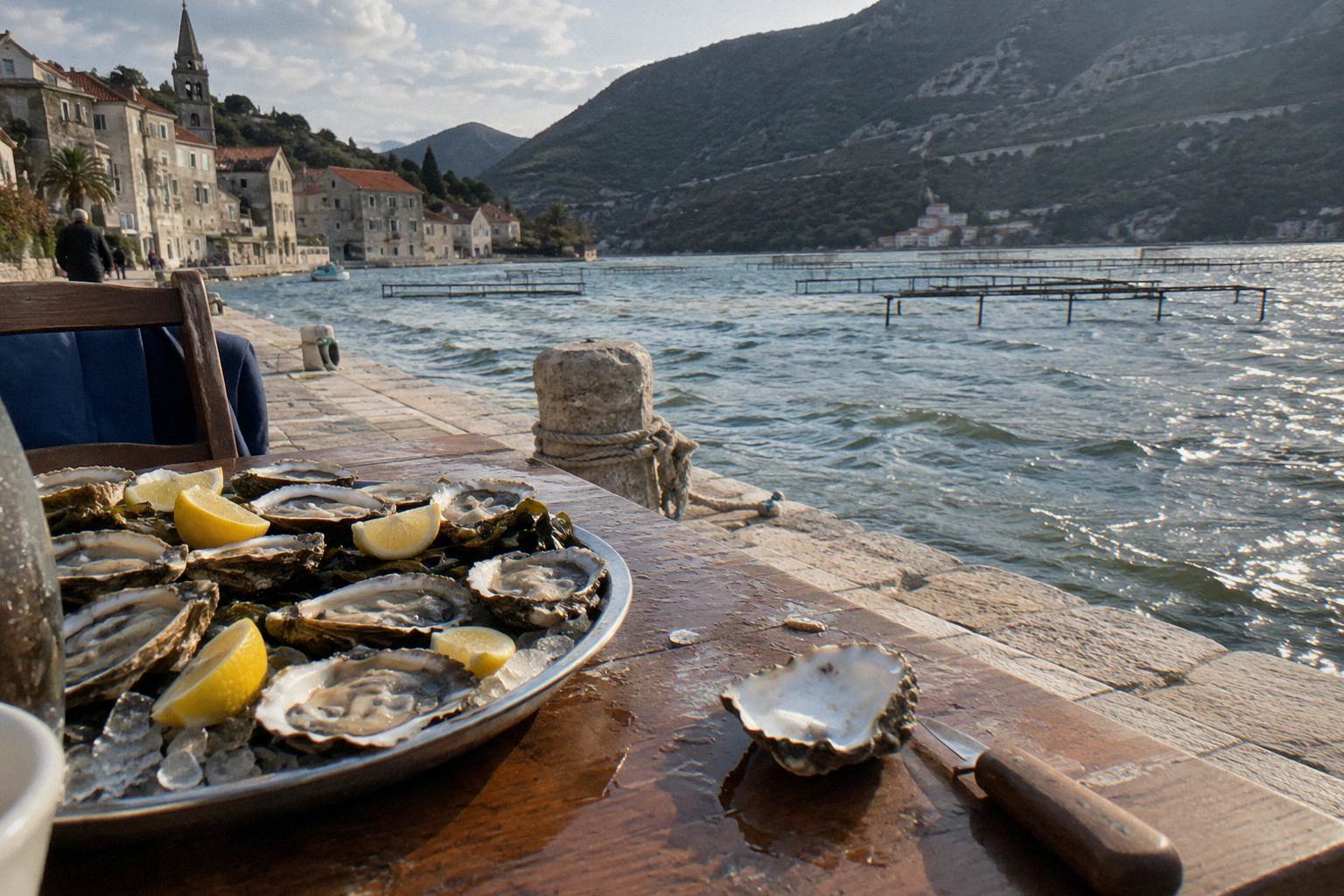
The question in the title sounds like a dare, and plenty of visitors to the Dubrovnik area arrive with exactly that plan: a week on the coast, a boat to a Mali Ston oyster farm, and a personal target of twenty shells before lunch. Whether that is a good idea is not something the farming record can answer, and this page will not pretend otherwise. What the record does cover is where Ston oysters come from, how long they take to grow, when they are at their best, and which day trips from Dubrovnik actually serve them.
If you are still choosing between an oyster trip, a wine day or an Old Town walk, Dubrovnik Food Tours compares all of them side by side, and the dedicated guide to the Ston oyster tours from Dubrovnik goes deeper on that one format than a single article can.
Nobody in the verified record, from the Ston authorities to the oyster farms themselves to any tour operator, says how many oysters a person can or should eat in a day. The sources cover farming, not diet. What can be said with confidence is that Mali Ston Bay farms the European flat oyster, that farm visits run year-round, and that the tours from Dubrovnik serve them in set portions such as five oysters per person.
Start with what the question is really asking. Some readers mean it literally: can a healthy adult physically eat twenty oysters at one sitting on the Mali Ston waterfront. Others mean it as shorthand for "is the oyster scene here as generous as I have heard". The honest answer to both is the same: the sources used for this page, the official Ston visitor pages and the Mali Ston oyster farm's own material, describe a protected marine area with centuries of shellfish farming and nothing about portions, dietary limits or health effects. Croatia sells and serves alcohol from age 18, and several of the wine-focused tours carry an 18+ line, but no tour in the record sets any quantity of oysters, only what is included per person.
So the practical picture is this. On a farm visit you will be served what the tour includes or what you pay for on the day. The "Ston Oysters, Lunch Paid On Day" trip by Dubrovnik Tours - Horizon lists 5 oysters per person plus a portion of mussels prepared buzara style, paid in cash to the farmer. Check availability if that format suits you. If twenty is your personal target, the farm is the place to negotiate it, and the price of extra shells is a conversation to have on the day rather than a figure this page can print.
There is a second reason the question matters to travellers. Oyster portions are one of the few places where tour inclusions differ sharply from one another, and reading them carefully is the difference between a lunch you expected and a bill you did not. The comparison below sets out exactly which trips feed you shells and which leave the tasting as an extra.
What Kind Of Oysters Come From Ston?
Ston oysters are the European flat oyster, Ostrea edulis, farmed alongside the Mediterranean mussel in Mali Ston Bay, a protected marine area with centuries of shellfish farming behind it. The bay's visitor pages and the farms themselves describe the same two species. No tour operator in the Dubrovnik record claims a different oyster, and the flat oyster is the name to look for when a menu or a farm stand specifies.
The European flat oyster is the native flat-shelled species of European coasts, and Mali Ston Bay is one of the places where it is still farmed at scale. The official Ston pages on farm visits and tastings describe the bay as a protected marine area and note the long farming tradition, and the Mali Ston oyster farm's own site names both the flat oyster and the Mediterranean mussel as its products. The species detail matters because "an oyster" is not one animal: the flat oyster is generally described as smaller and softer-flavoured than the Pacific oyster that dominates most global production, and anyone who has only ever eaten the Pacific kind should expect something different at a Ston farm.
The mussels deserve equal billing. Every tour in the record that serves oysters also serves mussels, usually prepared buzara style, in a tomato and wine broth, and served with bread. The "Oyster And Mussels Lunch Boat Tour" by Travel agency City Of Stone lists oysters and mussels with Buzara in tomato sauce and wine, from €138 per person, rated 4.8 across 35 reviews. The "Oysters, Mussels And Lunch, 4 Hours" trip from the same operator covers a Little Ston bay boat, Ston itself and a Pelješac wine tasting, from €155 per person, and carries no printed rating. Reading the two listings side by side is the fastest way to see how the same bay and the same shellfish get packaged into different days.
One more thing the species question settles: the shellfish at Ston are farmed, not dredged wild. That is a meaningful difference for visitors who picture fishermen raking the seabed. The farming technology page at the Mali Ston farm describes a cycle of collectors and ropes, which is the subject of the next section.
How Long Does A Ston Oyster Take To Grow?
An oyster in Mali Ston Bay reaches market size in about two to three years: roughly one year on collectors, then about two years growing on ropes. That timeline comes from the farm's own description of its farming technology, and it explains why farm visits are structured as tastings rather than all-you-can-eat sessions.
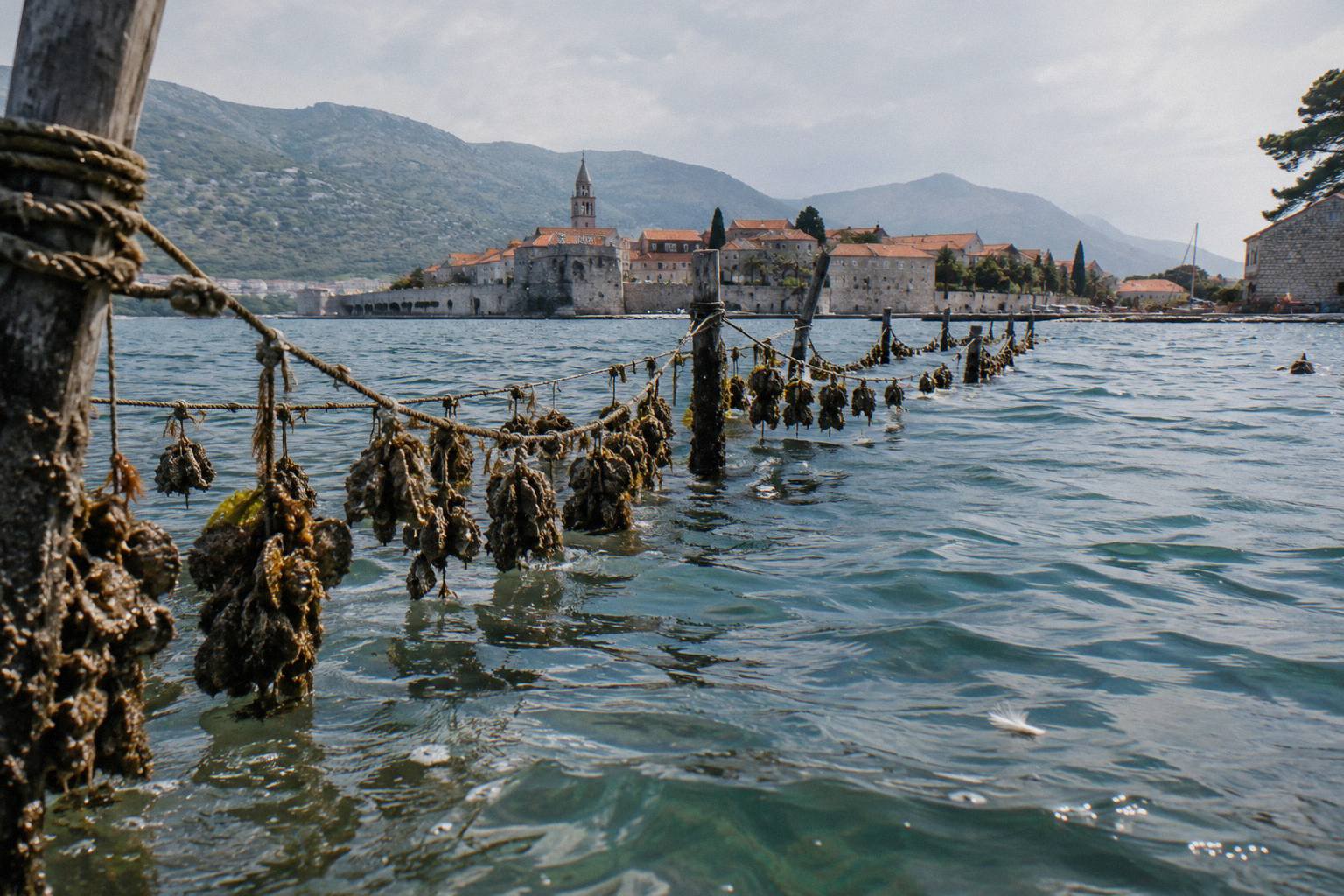
The Mali Ston oyster farm's farming technology page sets out the cycle: the young oysters spend about a year attached to collectors, then around two more years maturing on ropes suspended in the bay. The mussel side of the farm runs on the same principle. This is not a detail for its own sake. A two-to-three-year production cycle is the reason a farm tasting is priced and portioned the way it is, and it is useful context for anyone who finds themselves wondering why a boat trip lists five oysters per person rather than a bottomless plate.
The growth cycle also connects to the season question. Farm visits run year-round, per the official Ston pages, but the same pages describe the cooler months as the best time for Ston oysters. If your trip falls in the height of summer you can still visit a farm and eat well; you are simply not there in the months the locals themselves single out. The Ston oyster festival adds another calendar marker: it is held around the Feast of St Joseph on 19 March, and the official festival page is the place to confirm the year's dates before building a trip around them.
None of this growth information tells you how many oysters to eat, and it is worth being blunt about the boundary of the record: the sources cover farming and seasonality and stop there. No dietary guidance appears in any of them, and no health claim of any kind belongs in an answer to the twenty-oyster question. What the cycle does give you is respect for the portion and a reason to book the tours that serve the shellfish at the source.
When Is The Best Time To Eat Ston Oysters?
Farm visits and tastings in Mali Ston Bay run year-round, and the official Ston material describes the cooler months as the best time for the oysters. The Ston oyster festival falls around the Feast of St Joseph on 19 March. There is no printed month range for a closed or inferior season, so a summer visit loses you nothing except the locals' preferred window.
This is one of those answers that benefits from being short. The bay does not close. The farms receive visitors in every month, the boats run to the platforms in warm weather and cool, and the tours from Dubrovnik operate across the calendar with the caveats each listing carries. What changes with the season is the character of the animal and the mood of the waterfront: cooler months are when the Ston material says the oysters are at their best, and a March visit can coincide with the festival if the dates line up.
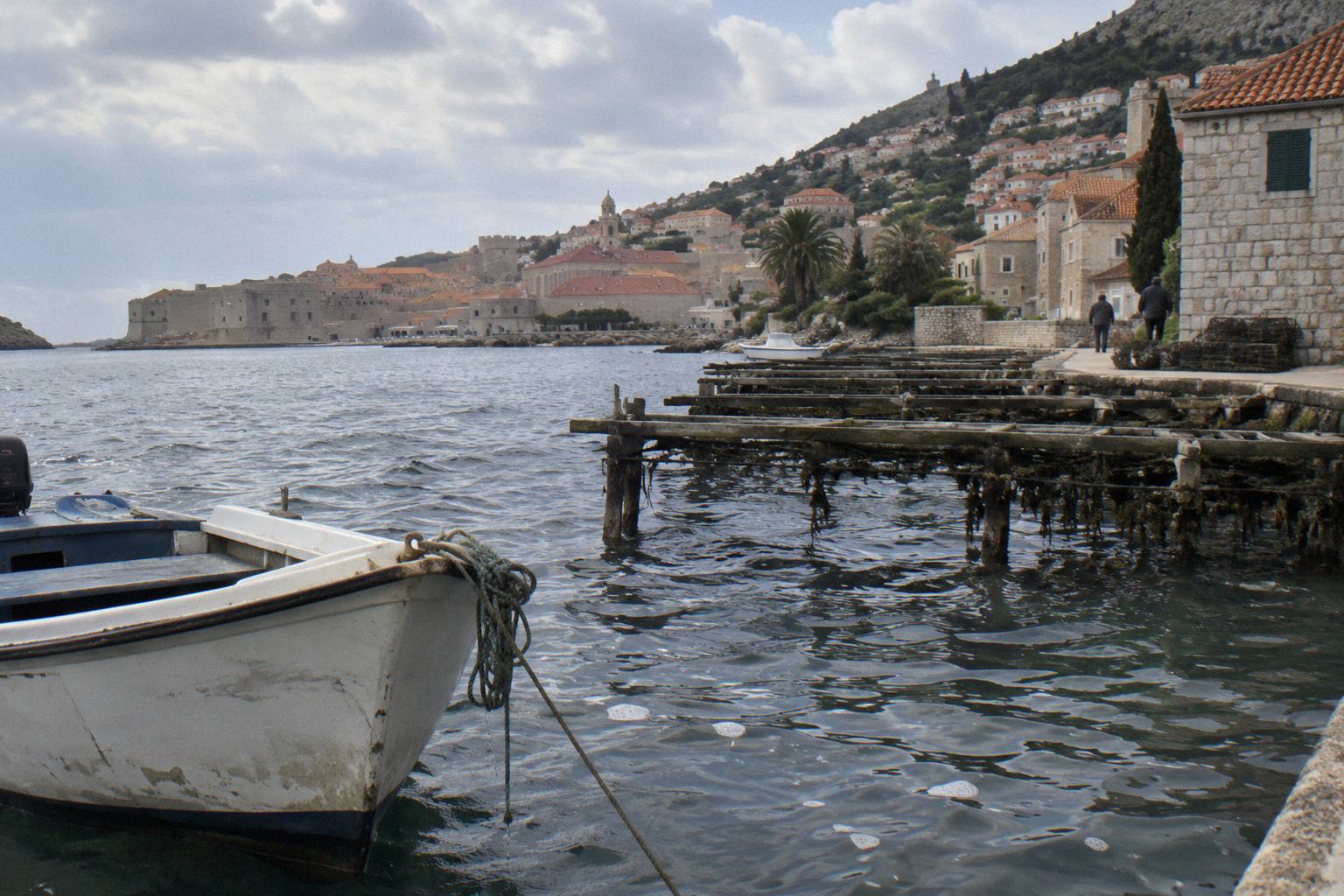
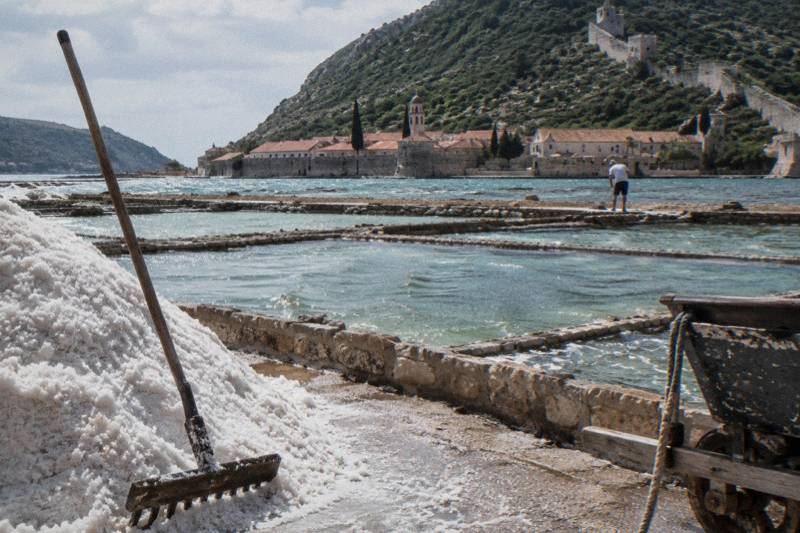
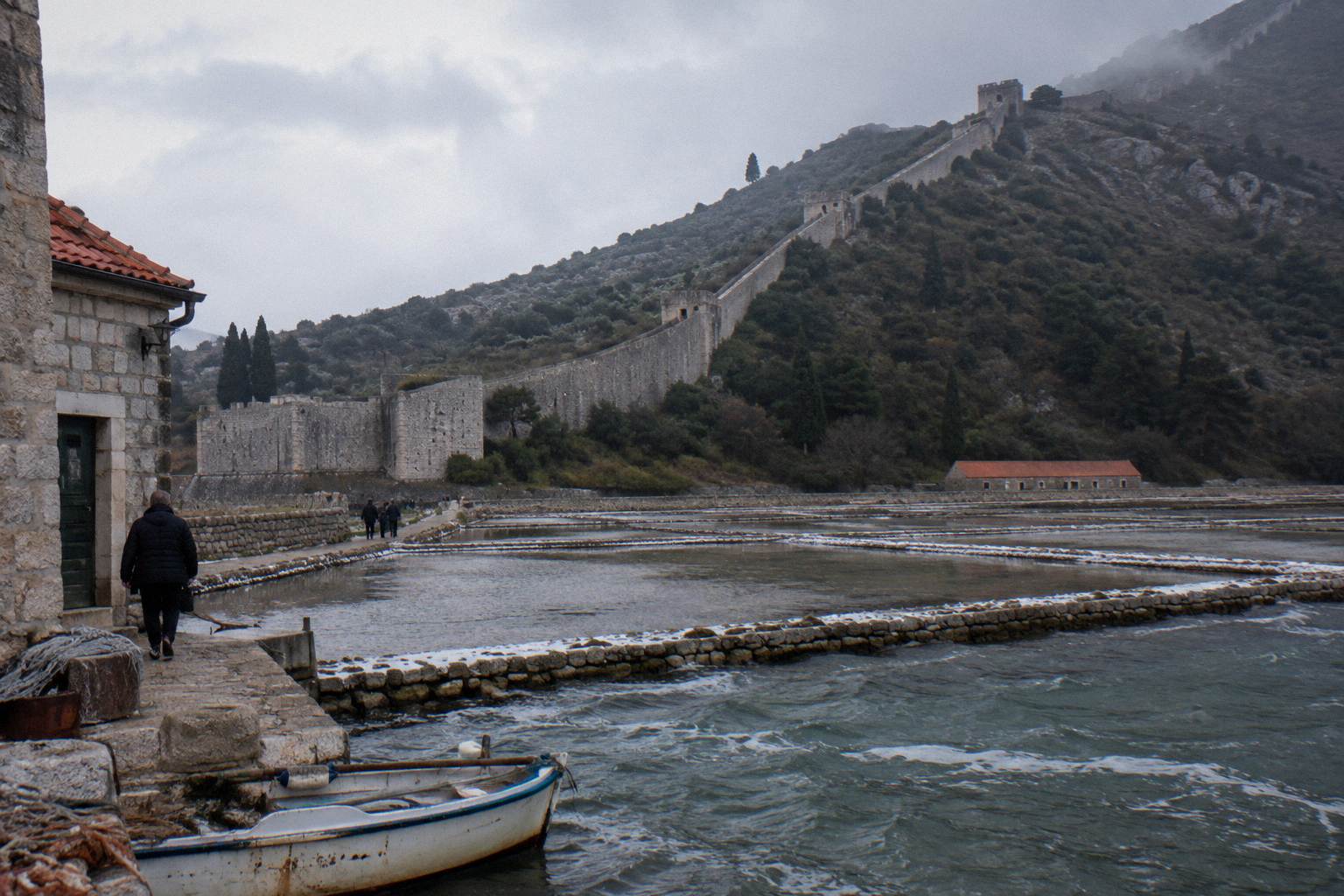
For trip planning, the season pairs with the weather in a straightforward way. A summer oyster day usually adds a swim: the "Oyster And Wine, 6.5 Hours" trip by Maritimus Travel, limited to 8 guests and meeting at Gruž Market, lists a surprise swim stop and asks guests to bring swimwear, from €190 per person, with lunch excluded and an 18+ minimum age. A spring or autumn day leans on the town instead: Ston itself, its salt works, and the walls, about 5.5 km long, built from the 14th century by the Republic of Ragusa to protect the salt pans. Several tours include a Ston stop or a walking tour of the walls alongside the shellfish, so the season question is really a question about which half of the day you want to dominate.
There is also a drink-driving angle worth one paragraph. Croatia's limit for drivers is 0.5 per mille, and 0.0 for drivers under 24 and for novice and professional drivers. Since nearly every oyster tour pairs the shellfish with wine, a tour with transport included is the format that suits anyone planning to drink, in every season. The related coverage in the Pelješac wine tour guide goes deeper on the wine half of these days.
Which Tours From Dubrovnik Actually Serve Oysters?
Seven tours in the current record serve oysters, and they differ mainly in what is included and what you pay for on the day. Portions range from five oysters per person on several trips to an optional paid oyster experience on the private per-vehicle tour. Prices run from €138 to €350 per person across the per-person rows, plus one per-vehicle trip that is not comparable.
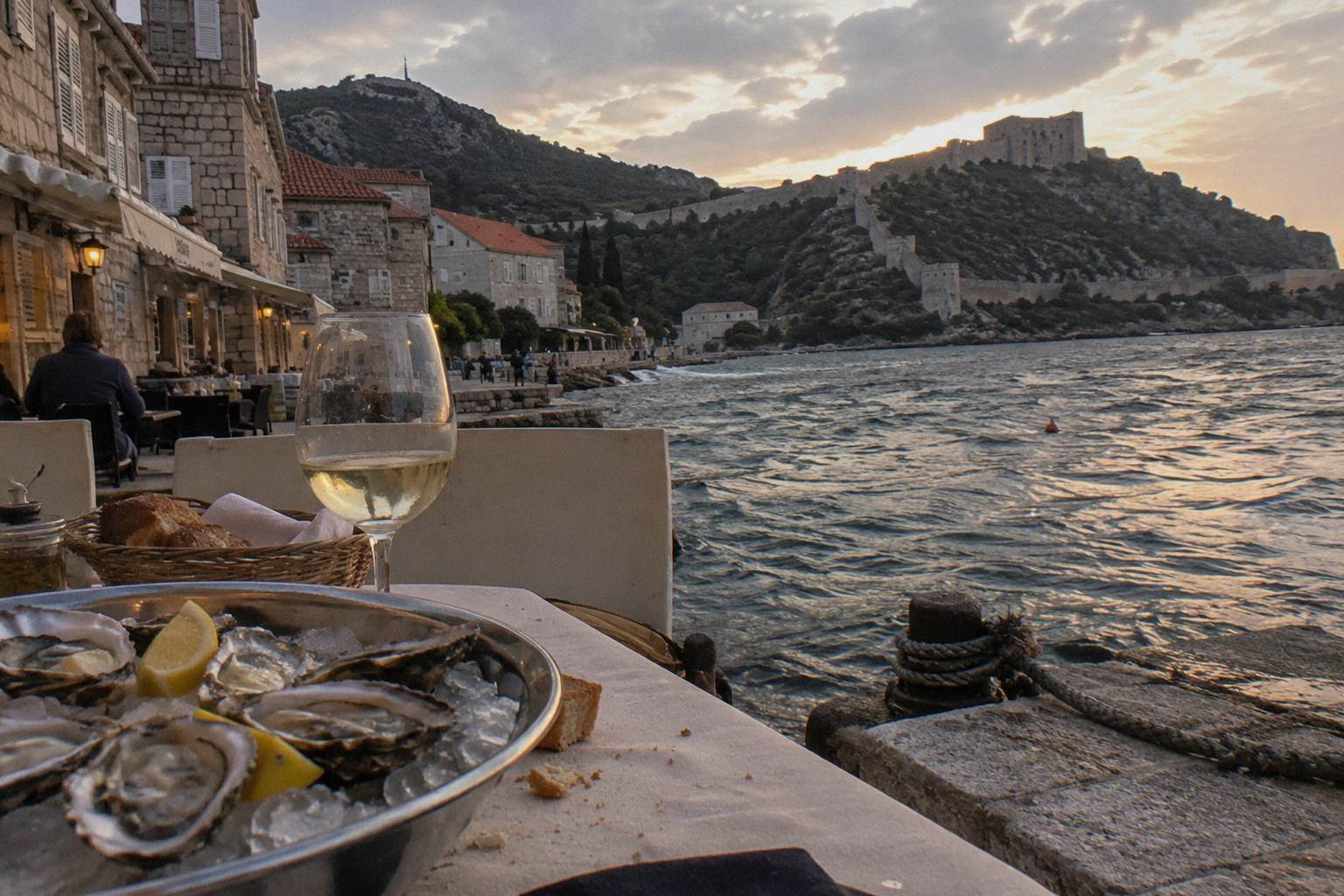
The table below sets out the oyster-serving tours as the record lists them. Per-vehicle and per-group prices sit in their own row and are never compared with per-person prices.
| Tour and operator | Oysters as listed | Price basis | Rating |
|---|---|---|---|
| Ston Oysters, Lunch Paid On Day (Dubrovnik Tours - Horizon) | 5 oysters per person, buzara mussels, paid in cash to the farmer | From €185 per person | 5 across 10 reviews |
| Oyster Farm And Winery, Tapas Included (Dubrovnik Wine Tours) | 5 oysters per person with one matching wine | From €158 per person | 4.9 across 25 reviews |
| Oyster And Mussels Lunch Boat Tour (Travel agency City Of Stone) | Oysters and mussels, Buzara in tomato sauce | From €138 per person | 4.8 across 35 reviews |
| Boat Ride To Oyster Farm, Tastings (Cava tours Dubrovnik) | Oysters and mussels served from the sea | From €195 per person | 5 across 31 reviews |
| Oysters, Mussels And Lunch, 4 Hours (Travel agency City of Stone) | Oyster and mussel tasting, lunch in title | From €155 per person | None printed |
| Oyster And Wine, 6.5 Hours (Maritimus Travel) | Oysters and mussels with bread on the boat | From €190 per person | None printed |
| Private Oysters And Wine, All Inclusive (Dubrovnik Tour Guide) | Oysters and wine, all inclusive per its own title | From €340 per person | 5 across 86 reviews |
| Private Wine And Oysters, Per Vehicle (Simply H) | Optional oyster experience at €60 per person, paid separately | From €750 per vehicle | 5 across 16 reviews |
Read the inclusions column carefully, because it carries the whole argument of this article. The trip most visitors picture, shells at the farm with wine afterward, appears in different shapes. The "Boat Ride To Oyster Farm, Tastings" by Cava tours Dubrovnik takes a boat to a Mali Ston oyster farm and finishes with a wine tasting at Čurlin winery in Ponikve, from €195 per person, rated 5 across 31 reviews, though its own exclusions list the oyster tasting and the boat ride, so read the booking page before assuming the farm portion is inside the price.
The private end of the market handles oysters differently again. "Private Oysters And Wine, All Inclusive" by Dubrovnik Tour Guide is the only trip in the record whose own title says all inclusive: a boat ride to the oyster farm, entrance to the saltworks and a family winery, from €340 per person, rated 5 across 86 reviews, minimum age 12. Against it sits "Private Wine And Oysters, Per Vehicle" by Simply H, from €750 per vehicle for the transport, with the tastings as paid extras: €40 per person per winery at Miloš and Matuško, and €60 per person for the oyster experience in Ston Bay, rated 5 across 16 reviews. Same bay, same shellfish, completely different arithmetic, and the two prices are on different bases and cannot be set against each other.
The small-group middle ground is worth a paragraph of its own. "Oyster Farm And Winery, Tapas Included" by Dubrovnik Wine Tours runs 5 hours, serves 5 oysters per person with one matching wine at the farm, then 5 wines from barrel and bottle with tapas-style food and a WSET-style introduction, from €158 per person, rated 4.9 across 25 reviews, minimum age 16. It is the most structured tasting of the oyster rows, and the one for readers who want the wine education as much as the shells.
What Do Oyster Tours Cost And What Stays Extra?
Per-person oyster tours run from €138 to €340, with one private experience at €350 per person that lists oysters, wine and snacks, and one per-vehicle trip at €750 where every tasting is a paid extra. The pattern to watch is the extras column: farm lunches, boat fees, winery tastings and the oyster experience itself are outside the headline price on several trips.
The cheapest oyster day in the record is the "Oyster And Mussels Lunch Boat Tour" from €138 per person, with lunch included. The dearest per-person oyster experience is "Wine, Oysters, Snacks Included" by BreatheInCroatia, from €350 per person for a 6-hour private trip with oysters, a wine tasting and snacks, rated 5 across a small number of reviews, 7 in total, minimum age 18. Between those poles sit most of the trips described above.
The extras are where budgets go wrong, so here they are in one place. On "Ston Oysters, Lunch Paid On Day", the farm lunch of 5 oysters per person and buzara mussels is paid in cash to the farmer, and the winery tasting (3 glasses per person) and the Ston walls entrance are also outside the price. On the Simply H per-vehicle trip, the tastings cost €40 per person per winery and €60 per person for oysters on top of the €750 vehicle price. On "Ston Oysters, Lunch Paid On Day" the headline from €185 per person is therefore a floor for transport and guidance, not the whole day's spend.
Two more rows complete the picture for readers weighing an oyster day against alternatives. The "Oysters, Mussels And Lunch, 4 Hours" trip from City of Stone, from €155 per person, is the shortest shellfish day in the record. And on the wine side of the peninsula, Dingač and Postup, made from the native Dalmatian red grape Plavac Mali, are among Croatia's first protected wine origins, so the winery half of these tours has its own weight; the guide to Plavac Mali and the Pelješac appellations covers that story separately.
A note on money itself: Croatia has used the euro since 1 January 2023, so the cash you hand the oyster farmer on the day is euros, and every price in this article is in euros exactly as the tours list them. If a summary of the cost question would help, the breakdown of what a Dubrovnik food tour costs puts the oyster trips next to the Old Town walks and the cooking classes.
What Trips People Up On Oyster Tours
Three mistakes account for most disappointment: assuming the oyster tasting is inside the headline price when the listing marks it as an extra, arriving at a farm without cash for the lunch paid to the farmer, and booking a wine-paired trip while planning to drive yourself. Each is avoidable by reading the inclusions and exclusions on the booking page before paying.
The first mistake is the common one. Several listings put the very thing the tour is named for in the exclusions column: the oyster tasting on the Cava tours boat trip, the farm lunch and winery fees on the Dubrovnik Tours - Horizon day, the €60 per person oyster experience on the per-vehicle trip. None of this is a trick; the listings say so plainly. But a traveller who reads only the title and the headline price can arrive expecting a full oyster lunch and find a bill instead. The fix takes two minutes: open the booking page, find the exclusions, and add the extras to the headline before comparing tours.
The second mistake follows from the first. Where a farm lunch is paid on the day, it is paid in cash to the farmer, at the farm. Cards and quiet bays do not always mix, and the tour's own description expects cash in hand. Anyone booking that format should carry euros, and anyone who would rather not think about it should choose a trip with lunch included, such as the boat lunch tour from €138 per person or the all-inclusive private day from €340 per person.
The third mistake is transport. With the Croatian drink-drive limit at 0.5 per mille, and 0.0 for under-24s and novice drivers, a self-drive oyster and wine day rules out the wine for whoever holds the keys. Every trip in the table above includes transport, and that is the quiet argument for booking rather than driving: the wine at the farm and at the winery stays on the table for everyone. If a broader comparison of formats would help before committing, the article on whether a private or small-group format suits you walks through the trade-offs.
Common Questions About Ston Oysters
Can I Eat 20 Oysters A Day? Ston Oysters Explained
No source in the record, from the official Ston pages to the farms to the tour operators, states how many oysters a person can or should eat in a day; the material covers farming, not diet, and this page offers no health guidance. What is documented: Mali Ston Bay farms the European flat oyster, farm visits run year-round, and tours serve set portions such as 5 oysters per person, with extra shells a matter to settle at the farm on the day.
What Species Are Ston Oysters?
Ston oysters are the European flat oyster, Ostrea edulis, farmed alongside the Mediterranean mussel in Mali Ston Bay, a protected marine area. The species is named by the official Ston visitor pages and the Mali Ston oyster farm's own material.
How Long Does It Take A Ston Oyster To Grow?
About two to three years to reach market size: roughly one year on collectors, then about two years maturing on ropes in the bay, according to the farm's description of its farming technology.
When Is Oyster Season In Ston?
Farm visits run year-round and the official Ston material describes the cooler months as the best time, with the Ston oyster festival held around the Feast of St Joseph on 19 March. No closed season is printed anywhere in the record.
Which Tour Serves Oysters With The Tasting Included?
Several do. The Oyster And Mussels Lunch Boat Tour (from €138 per person) includes lunch; the Oyster Farm And Winery trip (from €158 per person) includes 5 oysters with a matching wine; and the Private Oysters And Wine, All Inclusive day (from €340 per person) is the only trip whose title says all inclusive. On others, including the Ston Oysters, Lunch Paid On Day trip, the farm lunch and tastings are paid separately.
Is There An Age Limit On Oyster And Wine Tours?
Where a tour pairs oysters with wine, its own age line applies: 18+ on the BreatheInCroatia and Maritimus Travel trips, 16+ on the Dubrovnik Wine Tours day, and 12+ on the private all-inclusive trip. Croatia serves alcohol from age 18, so under-18 guests cannot be served wine on any of them.