Is Croatian Food Similar To Italian Food?
Croatian and Italian food share a coastal larder, but the dishes the Dubrovnik tours list tell a different story. Here is what actually overlaps and what does not.
In short: Yes and no. Croatian coastal food shares Italy's building blocks: olive oil, fresh fish, wine with lunch, bread on every table. But the signature plates are different. The Dubrovnik tours list black risotto, šporki makaruli, rozata, peka and fried oysters, not pizza and parmigiana. A food walk in Dubrovnik tastes distinctly Dalmatian, and the fastest way to settle the comparison yourself is to eat both cuisines in the same week.
This article belongs to the Dubrovnik food walks and cooking classes hub, where the walks, classes and tasting days compared below live.
| Quick Fact | Detail |
|---|---|
| Signature dishes on local tours | Black risotto, šporki makaruli, rozata, peka, burek, fried oysters |
| Shellfish | Mali Ston Bay farms the European flat oyster and Mediterranean mussel, a protected marine area |
| Oysters to market size | About 2 to 3 years on the farm |
| Signature red grape | Plavac Mali, a native Dalmatian variety behind Dingač and Postup |
| Konavle white | Malvasija Dubrovačka, revived from near extinction, a clone recognised in 2024 |
| Drinking age | 18, and several tours carry their own minimum age |
| Currency | Croatia has used the euro since 1 January 2023 |
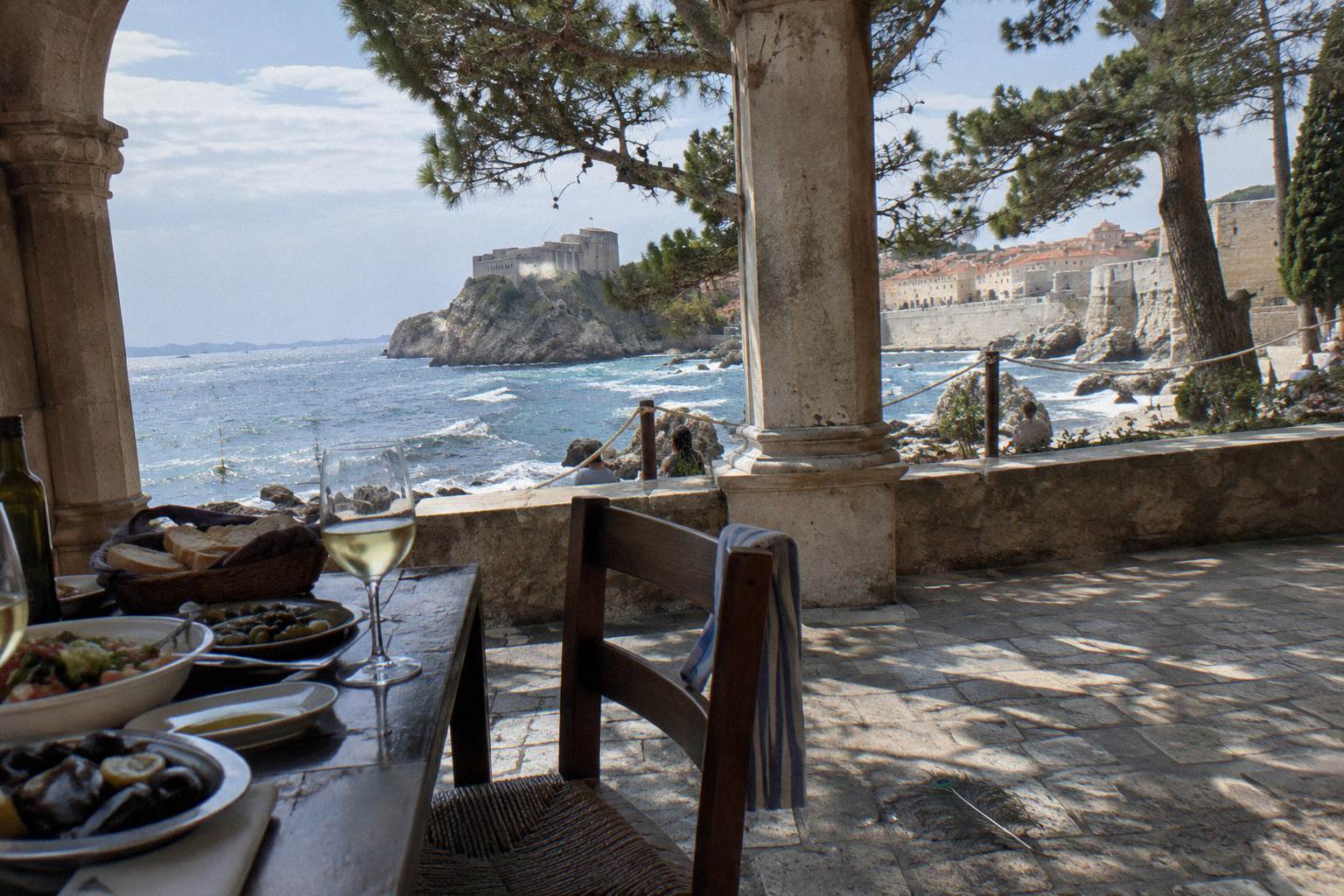
Partly, but less than the map suggests. The two kitchens share olive oil, grilled fish, wine at lunch and a love of bread, so nothing on a Dalmatian plate will feel alien to an Italian food lover. The differences sit in the signatures: Croatia's tours list black risotto, šporki makaruli, peka and rozata, plates you will not find on a standard Italian menu.
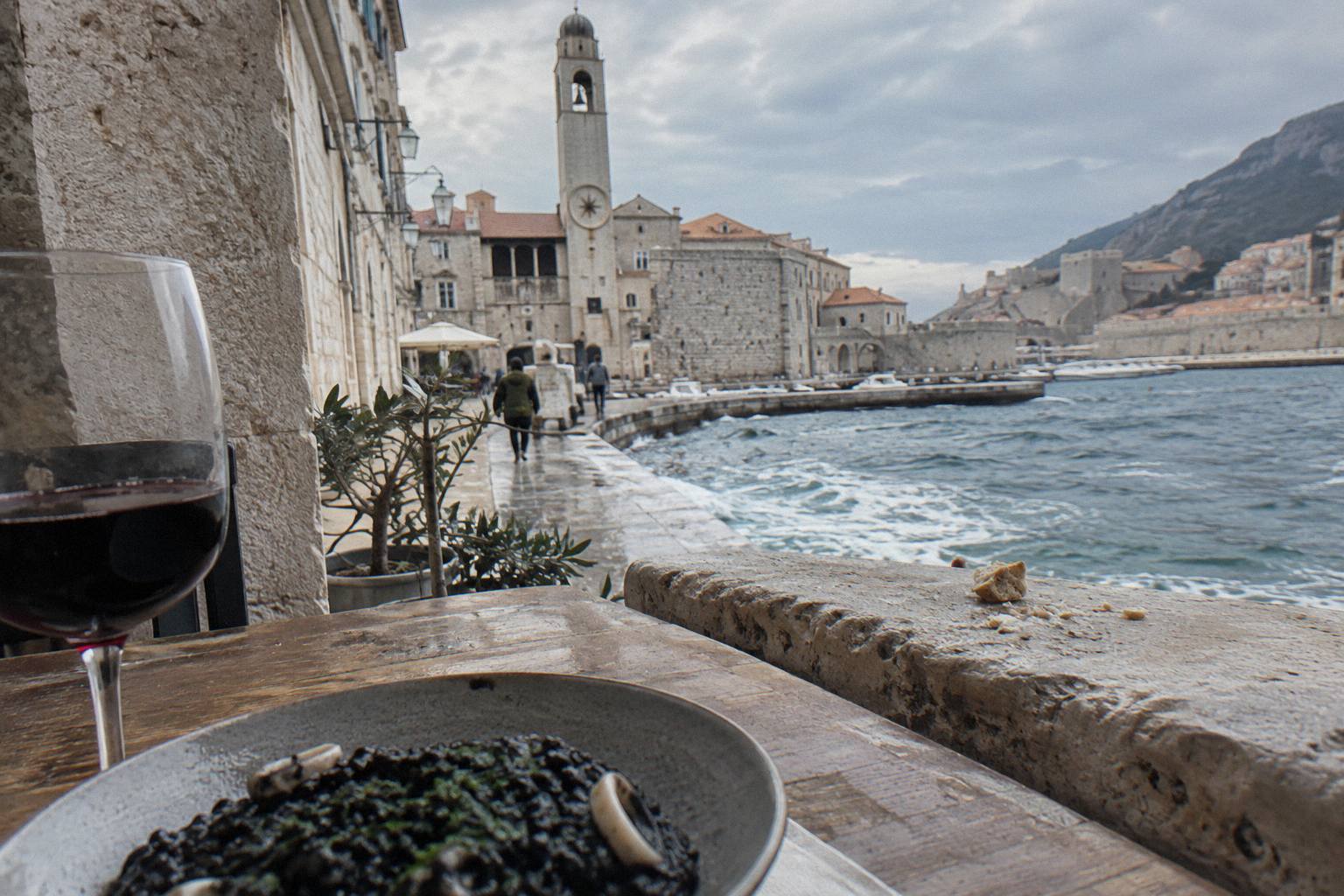
The honest answer starts with what is actually served in Dubrovnik rather than with history. The dishes the local tours list are the reliable record here. The 3-Hour City Tasting Walk by Free Spirit Tours Dubrovnik, for example, runs five stops in the Old Town covering sweets such as arancini and broštulane mendule, olive oil, cured meats and cheese with a glass of wine, and black risotto or rozata. That is a Croatian plate, start to finish. Nothing on that line-up is trying to be Italian, and nothing on it would confuse you if you arrived expecting Italy.
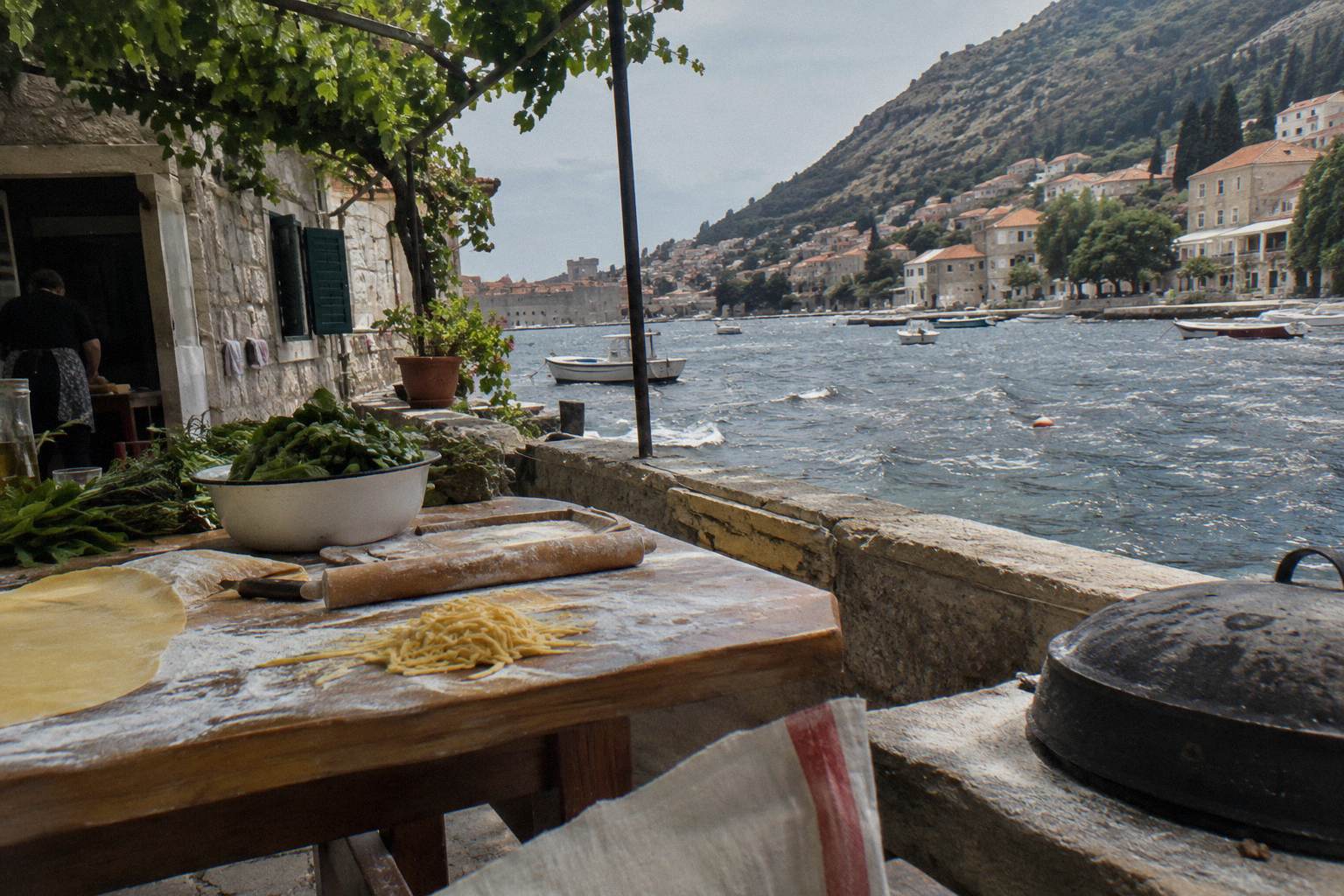
Then look at what the cooked-meal tours serve. The Peka Cooking Lesson by Florio za turizam i turisticka agencija d.o.o. teaches one technique: meat and vegetables slow-cooked under a bell-like lid, in Mokošica village, with a glass of local wine. Italy slow-roasts too, but peka is the dish visitors identify with Dalmatia, not Tuscany. The Richet Cooking Class builds its session around homemade makaruli pasta, šporki makaruli and rozata, with a welcome platter of cured meats and cheeses and two glasses of paired wine. Again: pasta, yes, but a shape and a sauce with no Italian counterpart on these pages.
Where the two cuisines genuinely meet is the raw larder. Both eat from the same sea, both press olive oil, both cure pork, both end a long meal with something sweet and a small glass of something stronger. If your question is really "will a fussy eater who loves Italy be happy in Dubrovnik", the answer is yes, comfortably. If your question is "is Croatian food just Italian food with a different flag", the answer is no, and one dinner will prove it.
The practical takeaway for a visitor: do not come to Dubrovnik looking for the Italy you already know. Come for the Dalmatian version of the Mediterranean, tasted on its own terms.
Which Dishes Can You Actually Taste On A Dubrovnik Tour?
The list is short and specific: black risotto, šporki makaruli, rozata, peka, burek, fried oysters, cured meats and cheese, arancini and other sweets. Those are the dishes the tours list, and each appears on a named walk or class you can book. Anything else you have read about Croatian cuisine may be true, but it is not on these plates.
Start with the walks, because they are the cheapest way to taste across the range. The Small Group, Hearty Lunch Tastings walk by Dubrovnik Food Tours runs four tastings over 3 hours 30 minutes: a Dalmatian starter platter, a main course at a family-run restaurant, a guided wine tasting at a wine bar, then gelato and pastries. It is capped at 10 guests, rated 4.8 across 482 reviews, and priced from €140 per person, and the tastings are described as replacing a hearty lunch or dinner. If you want one booking that answers the Italy question by mouth, this is it: a full plate of Dalmatian food in a single afternoon.
The Secret Food Tours, Wine Included walk takes a broader sweep. Its summer route runs eight tastings, including burek, candied figs, black risotto, šporki makaruli, cheeses and prosciutto, a fried oyster, ice cream and a secret dish, with rosé and red wine. There is a separate winter route that starts at Onofrio's Great Fountain and runs the Stradun, with the variant chosen at booking. It is the least expensive per-person tour on this site at from €76, runs 3 hours, and is rated 4.9 across 289 reviews.
The cooking classes narrow the focus. The 5-Hour Countryside Cooking Class by FABULA RAGUSEA has you cook a 4-course Dalmatian meal in a family garden and kitchen outside the city, with full glasses of local red and white wine, hotel pick-up and drop off included, and vegetarian and gluten-free options on request. The Garden To Table Countryside Class by Kameni Dvori, a Konavle holiday village operator, covers garden-to-table cooking with homemade fruit liqueurs and brandies, dried figs and sweets, and a 3 to 4 course lunch or dinner you prepare together.
None of these plates is Italian. All of them sit comfortably beside it.
What Does A Tasting Plate Look Like On Each Tour?
It varies more than you might expect. One walk hands you five small tastes across three hours, another serves a full four-course meal you cooked yourself, and a third pairs at least 13 tapas-style dishes with Croatian wine. The comparison table below sets the plates side by side so you can match appetite to booking.
The table covers the walks and classes discussed in this article. Prices are per person as shown on each booking page.
| Tour | Operator | What You Eat | Duration | Price |
|---|---|---|---|---|
| Small Group, Hearty Lunch Tastings | Dubrovnik Food Tours | Dalmatian starter platter, family-run restaurant main, wine tasting, gelato and pastries | 3 h 30 min | From €140 |
| Secret Food Tours, Wine Included | Secret Food Tours | 8 tastings on the summer route with rosé and red, separate winter route | 3 hours | From €76 |
| 3-Hour City Tasting Walk | Free Spirit Tours Dubrovnik | Sweets, olive oil, cured meats and cheese with wine, black risotto or rozata | 3 hours | From €99 |
| Peka Cooking Lesson | Florio za turizam i turisticka agencija d.o.o. | A peka meal you learn to cook, with local wine | 4 hours | From €135 |
| Richet Cooking Class | Richet | Makaruli pasta, šporki makaruli, rozata, welcome platter, two paired wines | 3 h 30 min | From €120 |
| 5-Hour Countryside Cooking Class | FABULA RAGUSEA | A 4-course Dalmatian meal you cook, with red and white wine | 5 hours | From €240 |
Notice the shape of the portions. The walks are built around tasting-size plates at multiple stops; the classes are built around one meal you prepare and then eat in full. The Small Group, Hearty Lunch Tastings walk sits between the two: its four tastings are explicitly described as replacing a lunch or dinner. If you are coming to Dubrovnik partly to settle the Italy comparison, book a walk for breadth and a class for depth, in that order.
The Full Meal Walking Tour by Do Eat Better Experience is a fourth shape again: an itinerant full meal across at least 4 stops with at least one alcoholic drink included for guests over 18, from €109 per person. It carries a 4.8 rating, but only across 5 reviews, a small pool, so treat the score as a hint rather than a verdict.
Where Croatian Food Clearly Parts Ways With Italy?
The break shows up in three places: peka, the pasta, and the wine. Peka is a Dalmatian cooking method, not an Italian one. Šporki makaruli and homemade makaruli are pasta shapes and sauces with their own identity. And the red in your glass is Plavac Mali, a native Dalmatian grape, not Sangiovese or Primitivo, whatever family resemblance a wine lover might sense.
Take peka first, because it is the dish most visitors have never met. The Peka Cooking Lesson in Mokošica village teaches it over 4 hours, with the meal you cook and a glass of homemade wine, from €135 per person. It is rated 5, but only across 10 reviews, so the sample is small. The listing notes lunch service and a vegetarian option, and transfers to and from the venue are excluded, so plan your own transport. The Private Konavle Gastro And Culture tour by Dubrovnik Tour Guide serves lunch prepared in traditional Dalmatian style peka too, alongside an old mills presentation with traditional sweets and liqueurs, a family-run winery tasting, and a minimum age of 12, from €340 per person.
Then the pasta. Richet's class makes the point in one afternoon: you roll makaruli by hand, dress it the local way as šporki makaruli, and finish with rozata, a caramel-topped custard the tours list as a Dubrovnik dessert. Italy has its custards and its fresh pasta; these are Croatia's own, and making them yourself is the clearest possible demonstration that the two traditions are siblings, not twins.
Then the wine. Dingač and Postup, the celebrated Pelješac reds, are among Croatia's first protected wine origins and are made from 100 percent Plavac Mali, a native Dalmatian red grape (see this Dingač and Postup guide). If your Italy reference point is Chianti or Barbera, a glass of Dingač will read as familiar in weight and different in character. A deeper look at the Plavac Mali grape is worth a read before a winery day.
In Konavle, the local white is Malvasija Dubrovačka, a variety revived from near extinction, with a clone officially recognised in 2024 (details in this Malvasija Dubrovačka overview). A white grape brought back from the edge of extinction is not something an Italian trip can offer you.
Is The Seafood The Same As In Italy?
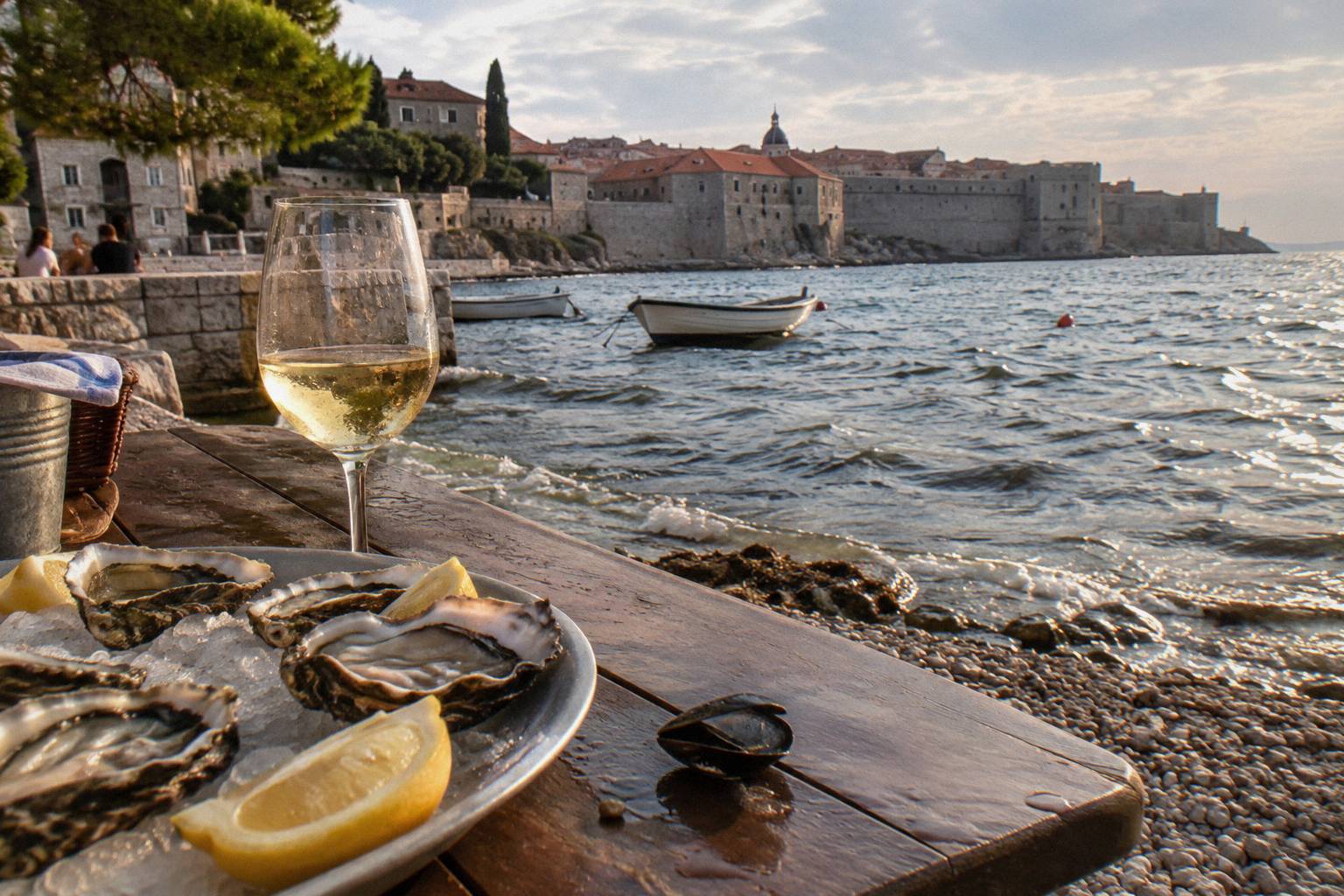
The seafood is where the comparison is closest and most concrete. Mali Ston Bay farms the European flat oyster and the Mediterranean mussel in a protected marine area with centuries of shellfish farming behind it, and several Dubrovnik tours take you to the farms by boat. Italy farms oysters too, but tasting one straight from Ston Bay water is its own experience.
The verified details make the case. Oysters here reach market size in about 2 to 3 years, spending around a year on collectors and then around two years on ropes (the farming cycle is described by the Mali Ston oyster farm). Farm visits run year-round, the oysters are described as best in the cooler months, and the Ston oyster festival is held around the Feast of St Joseph on 19 March, per the town of Ston's festival page. The flat oyster itself, Ostrea edulis, is the same native European species (species overview here), which is exactly why the comparison with Italy holds at the level of the animal and breaks at the level of the plate.
The tours that take you there differ in what is included. The Oyster And Mussels Lunch Boat Tour by Travel agency City Of Stone runs 5 to 6 hours from €138 per person with oysters and mussels, Buzara in tomato sauce, and wine, rated 4.8 across 35 reviews. The Oyster Farm And Winery tour by Dubrovnik Wine Tours pairs 5 oysters per person with one matching wine at the farm, then 5 wines with tapas-style food, over 5 hours from €158, rated 4.9 across 25 reviews, minimum age 16. And the Ston Oysters, Lunch Paid On Day trip by Dubrovnik Tours - Horizon is the one to read carefully: from €185 per person, the farm lunch, the farm boat and the winery tasting are all paid on the day, not included. Extras stay extras on that one.
Buzara itself is the giveaway dish. Mussels in a tomato and wine broth sounds Italian, and a bowl of it beside the bay tastes like the Mediterranean both countries share. This is the overlap zone of the two cuisines, and it is delicious territory.
Can You Taste Both Cuisines In One Dubrovnik Week?
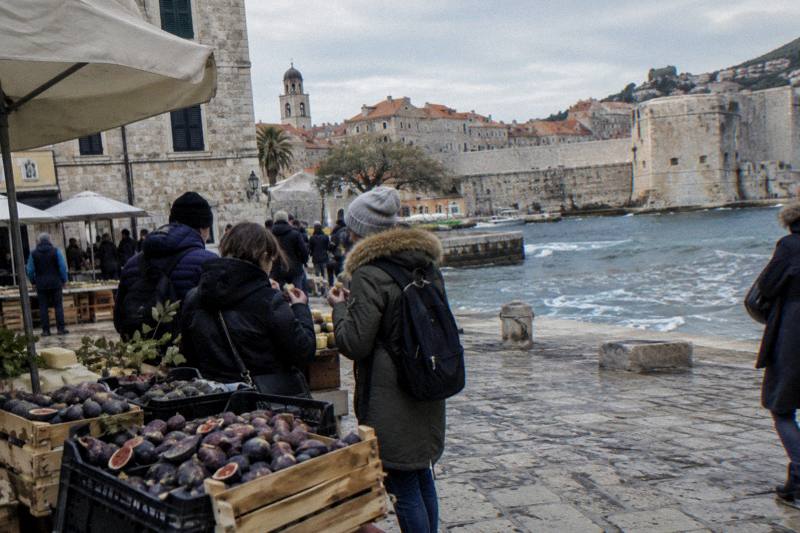
Yes, without trying hard. Dubrovnik's Old Town has Italian-leaning kitchens alongside Dalmatian taverns, and the market on Gundulićeva poljana is open mornings, Monday to Saturday, for the shared larder of both traditions. Book one Croatian food walk and one Croatian cooking class, eat the Italian meal on your own time, and the comparison makes itself.
The practical sequence most visitors settle on: a tasting walk on day one for breadth, a class or a wine day later in the week for depth. For the walk, decide between how to choose a food tour in Dubrovnik, which walks the whole decision, and the dishes-first route covered by what to eat in Dubrovnik.
For the class side, the two countryside options split neatly. FABULA RAGUSEA's 5-Hour Countryside Cooking Class includes hotel pick-up and drop off, all equipment and ingredients, red and white wine, and a tasting of homemade liqueurs and brandies, from €240 per person, rated 4.9 across 178 reviews. The Garden To Table class by Kameni Dvori adds homemade juice for non-drinkers and air-conditioned transport, from €226 per person, rated 5 across 30 reviews. Either one teaches you more about the Croatian kitchen in five hours than a week of restaurant meals.
If you would rather someone else do the cooking and the driving, the wine and oyster days out of the city are the third option, and they answer a related question: is Croatian wine like Italian wine? The transport-included format suits drinkers for an obvious reason: Croatia's drink-drive limit is 0.5 per mille, and 0.0 for drivers under 24 and for novice and professional drivers, so a day with a driver is the relaxed way to taste.
One scheduling note that belongs here rather than in a dozen other places: several tastings carry minimum ages. The Peka Cooking Lesson is 18 plus, the Pelješac wine-only tours are 18 plus, the oyster-and-wine days vary from 12 to 16 to 18, and the Family-style classes start lower, at 6 for Richet and 7 for the Konavle village lunch. Check the age line on each booking page before committing a family group.
What Trips People Up When Comparing The Two Cuisines?
Mostly expectations. Visitors arrive assuming Croatian food is Italian food under another name, order the familiar thing, and miss the Dalmatian plates entirely. Others assume "no pizza culture" means nothing for cautious eaters, which is also wrong. The trap is ordering around the cuisine instead of into it.
The first mistake is skipping the signature dishes because they sound unfamiliar. Šporki makaruli reads as a mystery on a menu; on the Richet Cooking Class it is the dish you make with your own hands, alongside homemade bread, a welcome aperitif and two glasses of paired local wine, from €120 per person. Its 5 rating comes from only 9 reviews, a small pool, so weigh the format rather than the score.
The second mistake is assuming everything on a tour is included. The Ston Oysters trip mentioned above charges the farm lunch, the boat and the winery visit on the day. The Private Wine Tasting, No Lunch tour by Cava tours Dubrovnik, from €225 per person for 8 to 9 hours, has tastings paid separately and lunch not included, and says so in its own title. The Wine, Oysters, Snacks Included day by BreatheInCroatia, from €350 per person, includes the oysters, wine and snacks, carries a minimum age of 18, and its 5 rating rests on just 7 reviews. Read what the price covers before you compare numbers, because these tours are priced on very different footings.
The third mistake is over-reading the Italy resemblance in the sweets. Gelato and pastries close the Small Group, Hearty Lunch Tastings walk; the 3-Hour City Tasting Walk serves arancini and broštulane mendule; rozata appears on several tours. Dessert is where coastal Croatia and Italy shake hands most visibly. Enjoy the overlap, but do not let it stand in for the whole cuisine.
The fourth mistake is going to wine country without a plan. Pelješac is an hour's worth of decision-making on its own, and this Pelješac wine tour guide exists precisely so the Dingač-versus-Postup question does not ambush you at the first cellar door.
Which Booking Settles The Question Fastest?
One evening does it: the Small Group, Hearty Lunch Tastings walk. Four tastings, a Dalmatian starter platter, a family-run restaurant main, a guided wine tasting and gelato, capped at 10 guests and rated 4.8 across 482 reviews, the most reviewed tour on this site. If Croatian food is or is not like Italian food, that walk will give you your own answer before dessert.
It helps that the tour is straightforward to book. Free cancellation with a 24 hour window applies, the price starts from €140 per person, and the format is a small group capped at 10, so the plate reaches everyone while it is still warm. Hotel pickup is excluded, as are gratuities and any drinks beyond the set menu, so budget those separately.
For travellers who want the comparison in glass-and-plate form, the evening experiences add one more angle. The Sunset Vineyard Wine Tasting by Vardia runs 3 hours from €90 per person, serving craft white wine, walnut liqueur, olive oil, homemade bread and Adriatic pie in the vineyard nearest Dubrovnik, rated 5 across 103 reviews with air-conditioned vehicle included. Sunset wine in a Croatian vineyard is about as far from a pizzeria as the Mediterranean gets, while still sharing every raw ingredient with it.
The whole range of walks, classes, wine days and oyster trips is laid out on Dubrovnik Food Tours, where each card shows what the price covers before you commit. However deep you go, one tasting walk plus one class is the pairing that turns "is it like Italian food" from a question into an opinion you earned at the table.
Common Questions About Croatian And Italian Food
Is Croatian Food Similar To Italian Food?
Partly. Both cuisines share olive oil, fresh seafood, cured meats and wine at meals, but Croatia's signature plates are its own: the Dubrovnik tours list black risotto, šporki makaruli, peka and rozata, dishes you will not find on a standard Italian menu. The best way to judge is to taste a Dalmatian tasting walk for yourself.
What Dishes Will I Actually Taste On A Dubrovnik Food Tour?
Depends on the tour, and each one names its plates. The Secret Food Tours walk lists eight summer tastings including burek, black risotto and a fried oyster. The Small Group, Hearty Lunch Tastings walk serves a Dalmatian starter platter and a family-run restaurant main. Cooking classes center on peka or makaruli pasta. Check the tasting list on each booking page before choosing.
Is Croatian Wine Like Italian Wine?
Not quite. Croatia's leading reds, Dingač and Postup, are made from Plavac Mali, a native Dalmatian grape, and are among Croatia's first protected wine origins. Konavle grows Malvasija Dubrovačka, a white variety revived from near extinction. A red drinker from Italy will find familiar weight but a different character in the glass.
Are Ston Oysters Available All Year?
Yes, farm visits run year-round, though the oysters are described as best in the cooler months. The Ston oyster festival is held around the Feast of St Joseph on 19 March. Oysters reach market size in about 2 to 3 years, farmed in the protected waters of Mali Ston Bay.
Is There An Age Limit On Food And Wine Tours?
On many of them, and each tour states its own line. The peka lesson and the Pelješac wine-only tours are 18 plus, one oyster-and-winery day is 16 plus, several private tours are 12 plus, and the Richet class admits children from 6. Croatia serves alcohol from 18. Check the age line on the booking page for your specific tour.
Is Everything Included In The Tour Price?
Not always, and the differences matter. Some tours, like the Small Group, Hearty Lunch Tastings walk, include the full tasting menu. Others, like the Ston oysters trip by Dubrovnik Tours - Horizon, charge the farm lunch, boat and winery visit on the day. Only one tour on this site is titled all inclusive. Read the inclusions before comparing prices.