Croatian Food Guide: What To Try And Where It Comes From
Croatian food in Dubrovnik means Dalmatian cooking: peka from under the bell, black risotto, šporki makaruli, rozata, oysters from Mali Ston Bay and Plavac Mali from Pelješac. Here is what each one is, what is actually verified about it, and which walks, classes and day trips put it on your plate.
Short answer
Dubrovnik sits in Dalmatia, and its food is Mediterranean: dishes the local tours list include black risotto, šporki makaruli, rozata, peka, burek and fried oysters. Wine means Plavac Mali from Pelješac and Malvasija Dubrovačka from Konavle. Oysters come from Mali Ston Bay, farmed year-round and best in the cooler months. Old Town food walks run from €76 per person.
This guide sits in the food-planning series on Dubrovnik Food Tours, next to the practical pages on how to choose a food tour in Dubrovnik and what to eat in Dubrovnik.
| Food or drink | What it is | Where it comes from | How you taste it in Dubrovnik |
|---|---|---|---|
| Black risotto | Seafood risotto colored with cuttlefish ink, a dish the tours list | Dalmatian coast | Old Town food walks, from €76 per person |
| Šporki makaruli | Homemade pasta dish the tours list | Dubrovnik area | Secret Food Tours' summer route, from €76 per person |
| Peka | Meat or seafood slow-cooked under a baking bell | Dalmatian countryside | Peka Cooking Lesson in Mokošica, from €135 per person |
| Ston oysters | European flat oysters from Mali Ston Bay | Pelješac peninsula | Oyster tours from €138 per person |
| Plavac Mali reds | Native Dalmatian red grape; Dingač and Postup are among Croatia's first protected wine origins | Pelješac peninsula | Wine day trips from €115 per person |
| Malvasija Dubrovačka | Konavle white variety revived from near extinction | Konavle Valley | Konavle wine and gastro tours from €111 per person |
What Is Croatian Food, In Plain Terms?
Croatian food is regional, and Dubrovnik's region is Dalmatia, so the cooking here is Mediterranean: olive oil, cured meats, cheese, seafood, pasta, figs and wine rather than the heavier central-European fare found further north. This page sticks to what the local tours actually list, dishes like black risotto, šporki makaruli, rozata, peka and burek, because that is the verified record. It makes no claims about who invented any of these dishes, and neither should a menu.
Croatia's cuisine changes as you move through the country, and pages about "Croatian food" often race through every region at once. That is not useful for a trip to Dubrovnik. What matters here is the southern Dalmatian table: the dishes the Old Town restaurants serve, the wines grown on the Pelješac peninsula across the water, and the shellfish farmed in Mali Ston Bay, an hour or so up the coast. The roster of food experiences around Dubrovnik, from walking tours to countryside cooking classes, is built entirely around this southern larder.
One caution up front. Food writing loves origin stories, and Croatian dishes attract a lot of them. This guide does not repeat any. The verified record for this page covers the shellfish farming of Mali Ston Bay, the wine varieties of Pelješac and Konavle, and the dishes named on the local tours' own pages. Everything else is left out rather than guessed. So when this page says black risotto or rozata, it means "a dish the tours list", nothing more.
Alcohol has its own rule that shapes food tourism here: Croatia sells and serves alcohol from age 18, and several of the tours on this page carry their own minimum ages, from 12 on some private tastings to 18 on the wine-focused day trips. If you are travelling with teenagers, check each tour's age line on its booking page before committing, because the limits genuinely differ from one operator to the next.
Which Dalmatian Dishes Do Dubrovnik's Food Walks Actually Serve?
Start with the cheapest per-person tour in the city, which also happens to be one of the most straightforward ways to eat through this list. Secret Food Tours, Wine Included runs a summer route with eight tastings: burek, candied figs, black risotto, šporki makaruli, cheeses and prosciutto, a fried oyster, ice cream and a secret dish, with rosé and red wine poured alongside. The winter route is separate, starting at Onofrio's Great Fountain and running the Stradun, and you choose the season's variant at booking. It is priced from €76 per person for 3 hours, rated 4.9 across 289 reviews, with free cancellation up to 24 hours ahead.
The most reviewed option takes a different shape. Small Group, Hearty Lunch Tastings by Dubrovnik Food Tours caps its groups at 10 and builds four tastings into a meal: a Dalmatian starter platter, a main course at a family-run restaurant, a guided wine tasting at a wine bar, then gelato and pastries. It runs 3 hours 30 minutes from €140 per person and is described as replacing a hearty lunch or dinner, so plan your day around it rather than before it. It carries 4.8 across 482 reviews, the deepest review pool of any food walk in the city, and free cancellation up to 24 hours ahead is listed.
The third walk worth knowing covers the sweets end of the spectrum. The 3-Hour City Tasting Walk by Free Spirit Tours Dubrovnik, a small group capped at 12, starts at Orlando's Column and visits five local spots serving arancini, broštulane mendule, olive oil, cured meats and cheese with a glass of wine, and black risotto or rozata. It costs from €99 per person. Note that these are tastings, not a full meal, so treat it as a generous graze rather than lunch.
Where Does Peka Fit In, And Where Can You Cook It?
Peka is Dalmatian slow cooking under a metal or ceramic bell covered in embers, typically meat, octopus or vegetables with potatoes, and the Dubrovnik area offers several ways to eat it or cook it yourself. The Peka Cooking Lesson in Mokošica village runs 4 hours from €135 per person, with a vegetarian option and a minimum age of 18. One Konavle private tour includes a peka lunch prepared on the day, from €340 per person.
Peka is the dish visitors most often ask about after seeing it mentioned in Dalmatian restaurant menus, and the honest description is the simple one: ingredients placed in a shallow dish, covered with a bell, and buried in hot embers so everything cooks slowly in its own steam. That is the technique; this page makes no claim about where or when it was invented, because no verified source in the record covers that. What is verified is where you can eat and cook it around Dubrovnik.
The most direct route is the Peka Cooking Lesson, 4 Hours, run by Florio za turizam i turisticka agencija d.o.o. in Mokošica village. You get a hands-on peka cooking lesson, the peka meal itself and a glass of local wine, from €135 per person, with a vegetarian option available per the listing. It carries 5 across 10 reviews, a small number of reviews, so treat the rating as an early signal rather than a verdict. Two details matter: lunch service runs April 1 to October 30 per the listing, and the minimum age is 18. Transfers to the venue are not included, so budget for a taxi.
If you would rather someone else handle the bell, Private Konavle Gastro And Culture by Dubrovnik Tour Guide includes a lunch prepared in traditional Dalmatian style peka, alongside an old mills presentation, traditional sweets and liqueurs, and a wine tasting at a family-run winery. It runs 6 hours from €340 per person, minimum age 12, rated 5 across 15 reviews. That is a private price, and it is per person, so compare it with other per-person private rows rather than with the group classes.
A third angle is the countryside cooking class, which teaches broader Dalmatian cooking rather than peka alone. The 5-Hour Countryside Cooking Class by FABULA RAGUSEA has you cook a 4-course Dalmatian meal in a family garden and kitchen, with full glasses of local red and white wine and a tasting of homemade liqueurs and brandies. Hotel pick-up and drop off are included, as are vegetarian and gluten-free options on request. It costs from €240 per person and carries 4.9 across 178 reviews.
What Should You Know About Croatian Wine Before You Book?
The two grapes that matter around Dubrovnik are Plavac Mali, the native Dalmatian red behind Pelješac's Dingač and Postup, and Malvasija Dubrovačka, a Konavle white revived from near extinction. Dingač and Postup count among Croatia's first protected wine origins and must be made from 100 percent Plavac Mali. Pelješac day trips with tastings at three wineries run from €115 per person with hotel pickup included.
Plavac Mali is the red grape of the southern Dalmatian coast, a variety related to Zinfandel that ripens on the steep, sun-facing slopes of the Pelješac peninsula. Its two famous growing areas, Dingač and Postup, count among Croatia's first protected wine origins, and both wines must be made from 100 percent Plavac Mali, as described in this guide to Dingač and Postup. When a Pelješac winery pours you a heavy, dark red, this is almost certainly what is in the glass.
The white story is Konavle's. Malvasija Dubrovačka is a local white variety that was brought back from near extinction; a selected clone, VV-141, was officially recognised in 2024, as reported by Večernji list and described by the producers working with the variety. It is a local revival story, not a protected-origin label, so do not expect it marketed like Dingač. You will meet it on Konavle valley tours rather than in every Old Town wine bar.
The practical way to taste either grape is a day trip with transport included, because Croatia's drink-drive limit is 0.5 per mille and 0.0 for drivers under 24 and novice or professional drivers, which makes self-driving a poor match for a tasting day. On Pelješac, Wine Tasting, Ston Village Day Trip by Super Tours covers a walking tour of Ston's walls and three family-run wineries in 8 to 9 hours, from €115 per person, rated 4.6 across 29 reviews, with hotel pickup and drop-off included and food and drinks excluded. On the Konavle side, Half-Day Wine Tasting And Cavtat by Travel agency City of Stone starts in Cavtat and visits a family winery for homemade wines and liqueurs with prosciutto, cheese and olives, from €111 per person for 4 hours.
For a shorter evening option, Sunset Vineyard Wine Tasting by Vardia pours a craft white wine, walnut liqueur, olive oil, homemade bread and Adriatic pie at the vineyard nearest Dubrovnik, in 3 hours from €90 per person, rated 5 across 103 reviews, with an air-conditioned vehicle included.
Why Are Ston Oysters Such A Big Deal?
Mali Ston Bay farms the European flat oyster and the Mediterranean mussel in a protected marine area with centuries of shellfish farming behind it, and the oysters take about 2 to 3 years to reach market size before they reach a plate. Farm visits run year-round, best in the cooler months, and the Ston oyster festival falls around the Feast of St Joseph on 19 March. Oyster tours from Dubrovnik start at €138 per person.
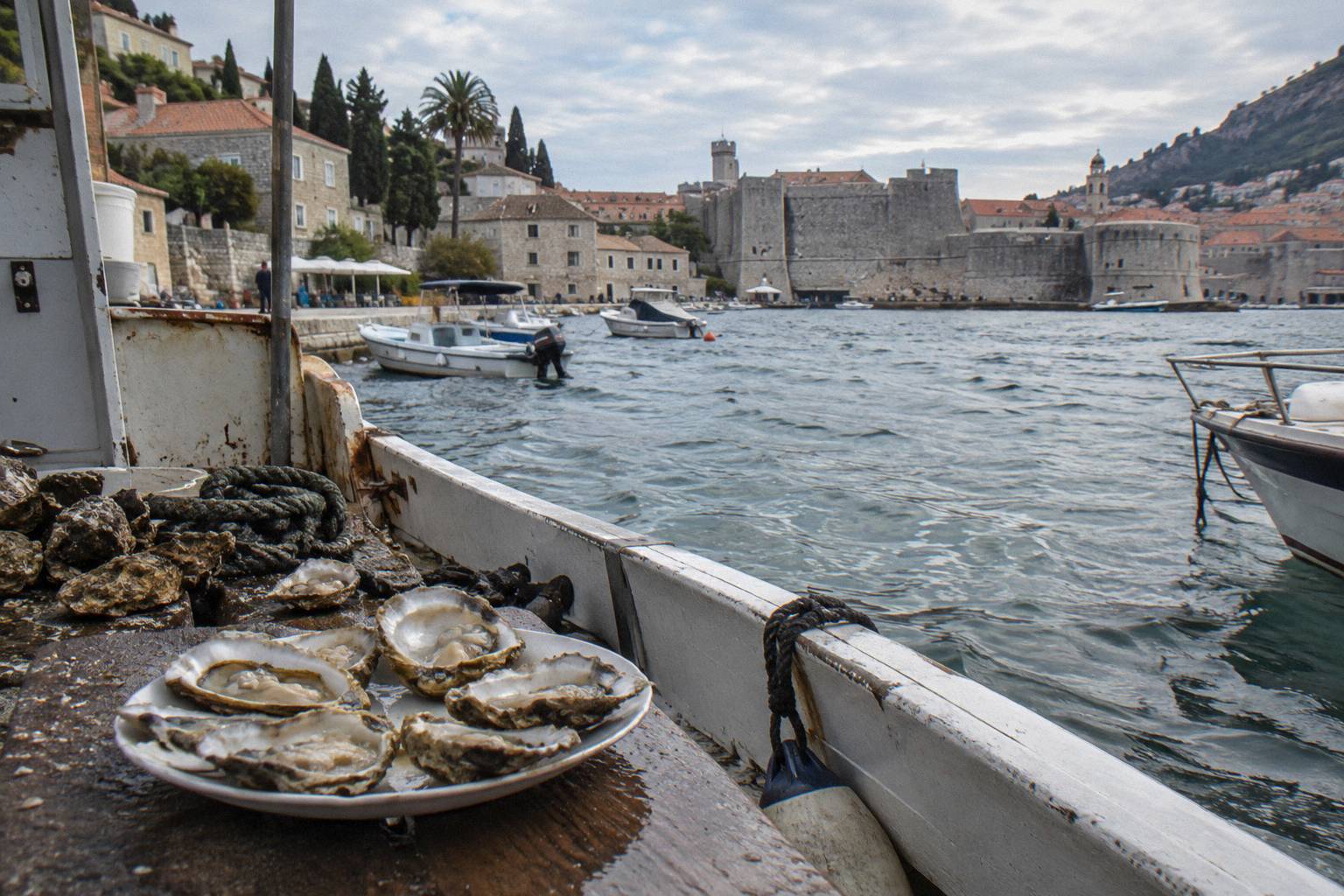
The oyster at the center of every Dubrovnik oyster tour is Ostrea edulis, the European flat oyster, the same native species prized on the northern side of the Adriatic, described in detail on the species overview. Mali Ston Bay, at the gateway to the Pelješac peninsula, is described as a protected marine area with centuries of shellfish farming, per the official Ston pages on farm visits and tastings. Alongside the oysters, the bay grows the Mediterranean mussel.
Per person, scale €0 to €340
The farming itself is patient work. According to the farm's own account of its farming technology, an oyster spends about a year on collectors and then around two years growing on ropes before it reaches market size, a 2 to 3 year cycle in total. That timeline is part of why farm tastings here feel like a visit to a working agricultural operation rather than a seaside photo stop: the rafts, ropes and collectors are the farm.
Seasonality is simple. Farm visits run year-round, but the cooler months are described as the best time for the oysters themselves, and the town marks the harvest with a festival around the Feast of St Joseph on 19 March, per the Ston oyster festival pages. If your trip falls in the cooler half of the year, an oyster trip is an easy recommendation; in high summer you can still go, and several tours add a swim stop.
The town behind the bay adds the backdrop. Ston's walls run about 5.5 km, built from the 14th century by the Republic of Ragusa to protect the salt pans that made the town wealthy, and many oyster tours include a walking tour or free time there. For the full picture of the boat rides, farm tastings and lunch stops, see the dedicated Ston oyster tour from Dubrovnik guide.
Which Oyster And Shellfish Tours Match Which Budget?
Budget travellers should book the group Oyster And Mussels Lunch Boat Tour by Travel agency City of Stone at €138 per person, since lunch and wine are included; private tours from €185 per person suit anyone wanting the boat to themselves, but some leave farm fees and tastings as extras, so check the exclusions before comparing headline prices.
The entry point is Oyster And Mussels Lunch Boat Tour by Travel agency City of Stone, a 5 to 6 hour group trip from €138 per person that includes oysters and mussels, Buzara-style in tomato sauce, wine, and transportation, rated 4.8 across 35 reviews. Lunch is included, which is not true of every row in this hub, so read carefully when comparing.
| Tour and operator | Basis | Price from | What is included | Rating |
|---|---|---|---|---|
| Oyster And Mussels Lunch Boat Tour, Travel agency City Of Stone | per person | €138 | Oysters, mussels, Buzara, wine, transport | 4.8 across 35 reviews |
| Oyster Farm And Winery, Tapas Included, Dubrovnik Wine Tours | per person | €158 | 5 oysters with a wine, 5 wines with tapas, minimum age 16 | 4.9 across 25 reviews |
| Boat Ride To Oyster Farm, Cava tours Dubrovnik | per person | €195 | Winery tasting at Čurlin winery; oyster tasting and boat ride paid separately | 5 across 31 reviews |
| Private Oysters And Wine, All Inclusive, Dubrovnik Tour Guide | per person | €340 | Saltworks entry, boat ride to the farm, family winery, minimum age 12 | 5 across 86 reviews |
| Wine, Oysters, Snacks Included, BreatheInCroatia | per person | €350 | Oysters, wine tasting, snacks, minimum age 18 | 5 across 7 reviews |
Two rows deserve a second look. Oyster Farm And Winery, Tapas Included by Dubrovnik Wine Tours is a 5-hour group trip with a WSET-style introduction: 5 oysters per person each matched with a wine at the farm, then 5 wines from barrel and bottle with tapas-style food, from €158 per person, rated 4.9 across 25 reviews, minimum age 16. Private Oysters And Wine, All Inclusive by Dubrovnik Tour Guide is the only tour in the entire roster whose own title says all inclusive: saltworks entry, a private guide, a Mercedes vehicle, a boat ride to the oyster farm and a family winery, from €340 per person, minimum age 12, rated 5 across 86 reviews.
The priciest per-person tour in the roster is Wine, Oysters, Snacks Included by BreatheInCroatia at €350 per person for 6 hours, with oysters, a wine tasting and snacks included and a minimum age of 18. Its rating of 5 comes from just 7 reviews, a small number, so weigh the itinerary rather than the stars. And watch the exclusions on cheaper-looking rows: on Ston Oysters, Lunch Paid On Day by Dubrovnik Tours - Horizon, the farm lunch, the boat and the winery fees are all paid separately on the day, so the €185 headline is not the final number.
What About Cheese, Olive Oil And Sweets?
Cured meats, cheese, olive oil, figs and pastries run through nearly every Dubrovnik tasting experience, from the five-stop City Tasting Walk to the welcome platters at the cooking studios. No single tour is dedicated to them, so pick your walk or class by format and price, from €76 per person upward, and let the boards arrive as they do. The Richet Cooking Class teaches the pasta and dessert end directly, from €120 per person.
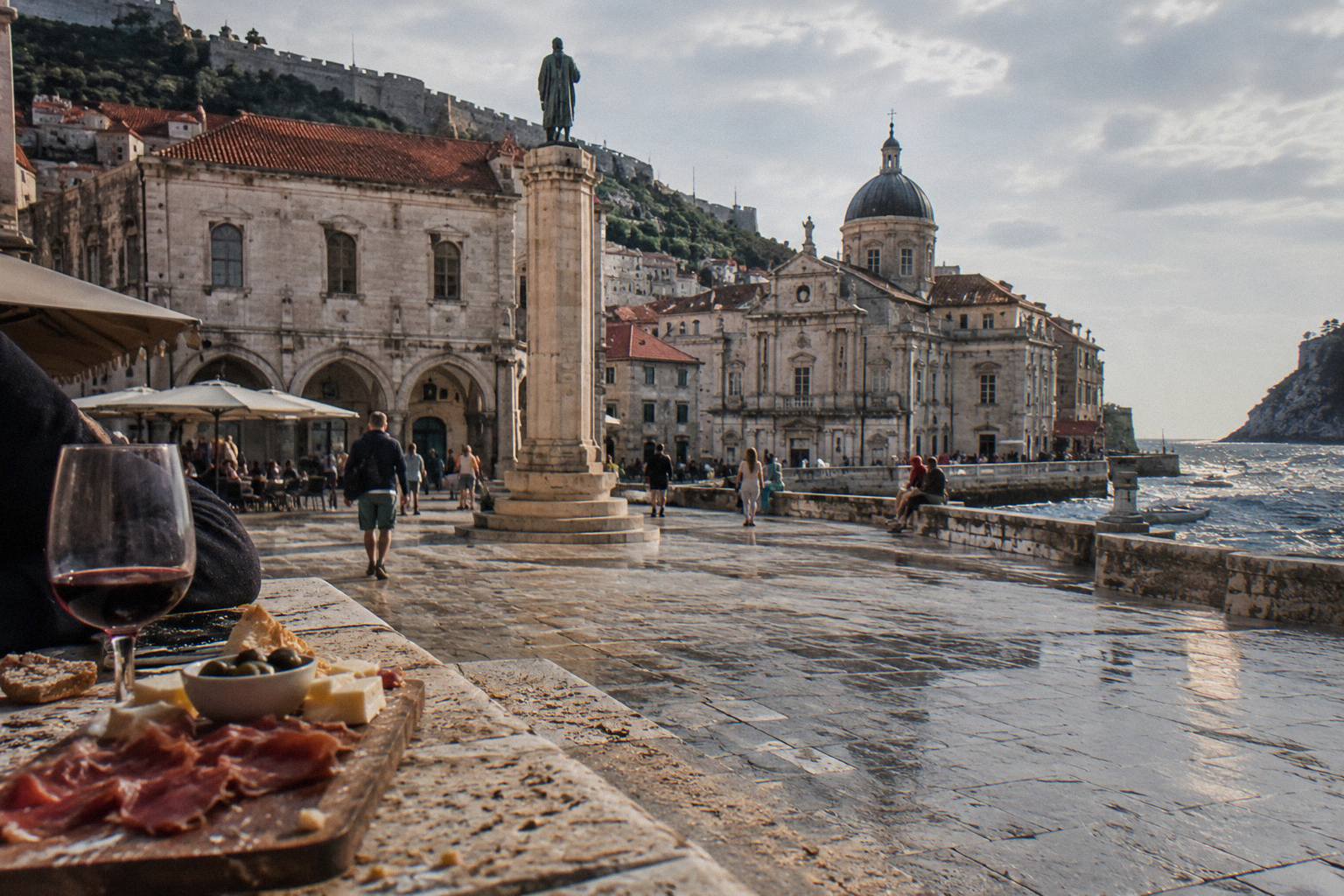
Every Dalmatian table around Dubrovnik opens the same way: prosciutto, cheese, olives, olive oil and bread. The tours reflect that. The Secret Food Tours summer route lists cheeses and prosciutto among its eight tastings, the Free Spirit Tours walk includes olive oil and cured meats and cheese with a glass of wine, and both the Richet Cooking Class and the Full Meal Walking Tour start from the same building blocks. If cheese and charcuterie are your priority, any of the Old Town walks will deliver them without you needing a specialist tour.
Sweets are where the Dubrovnik walks differentiate themselves. The tours list arancini, broštulane mendule, candied figs, rozata, ice cream, gelato and pastries, plus Adriatic pie and a wine cookie at the Vardia vineyard tasting. Richet Cooking Class by Richet teaches the pasta-and-dessert end of the repertoire directly: homemade makaruli pasta, šporki makaruli and rozata, with a welcome platter of local cured meats and cheeses and two glasses of paired wine, from €120 per person for 3 hours 30 minutes, minimum age 6, rated 5 across 9 reviews, a small number of reviews. Transportation to the meeting point is not included.
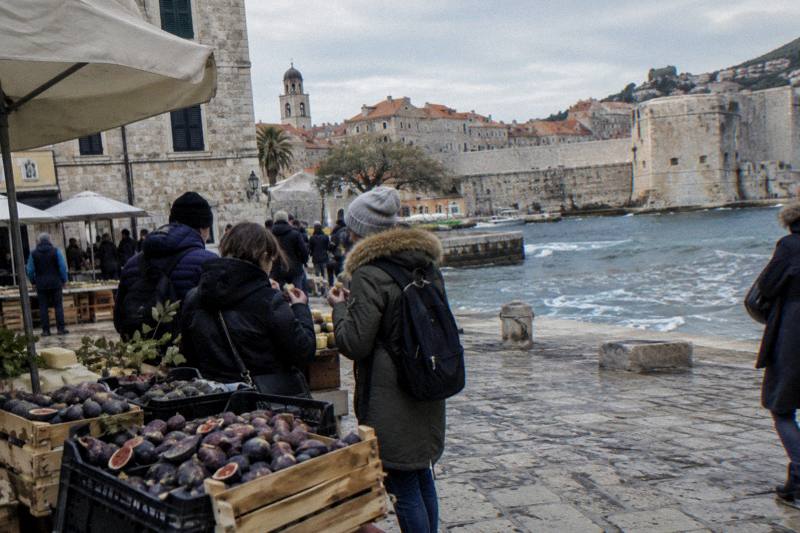
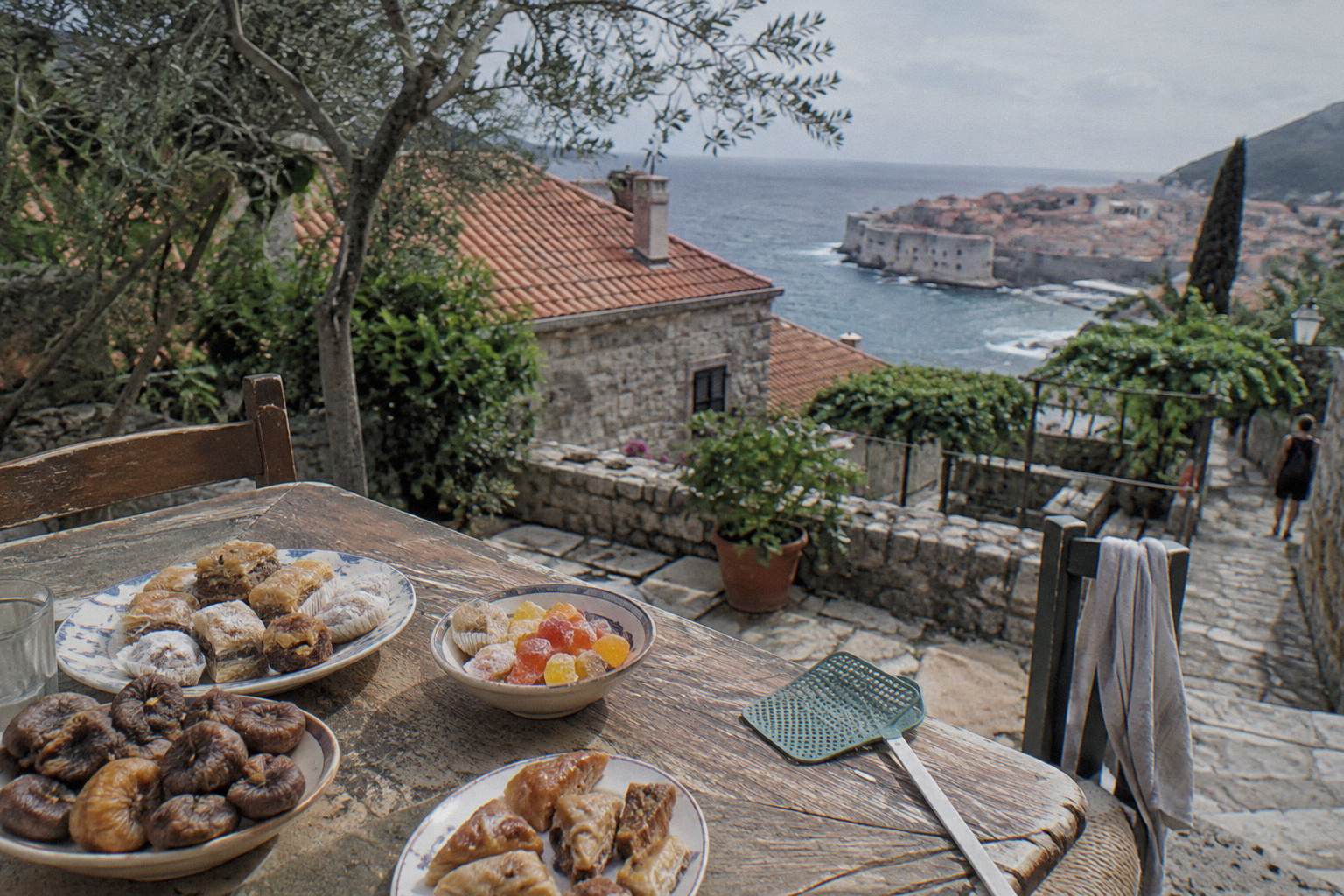
Figs deserve a special mention because they appear everywhere in Dalmatian sweets, dried and candied. The Garden To Table Countryside Class by Kameni Dvori - Holiday Village Konavle serves dried figs and homemade sweets alongside the 3 to 4 course meal you prepare together, plus homemade fruit liqueurs and brandies, from €226 per person for 5 hours, rated 5 across 30 reviews, with an air-conditioned vehicle included. It is the closest thing in the roster to a full Konavle pantry in one sitting.
How Do You Pair The Food With The Right Tour Format?
Match the format to the meal you want: a 3-hour walk for tastings from €76, a 3 to 5 hour class for cooking from €120, a 4 to 9 hour day trip for wine and oysters from €111, or a private tour from €249 per person when you want the guide to yourself. Group walks suit first visits; classes suit cooks; day trips suit drinkers who should not drive.
The cheapest per-person tour in the roster is a food walk, Secret Food Tours at €76, and the most reviewed is another walk, Small Group, Hearty Lunch Tastings at 4.8 across 482 reviews. That is not a coincidence: walking tours are the format most visitors start with, because they cover the most dishes in the least time inside the Old Town. If your trip is short or this is your first visit, book one of the walks first and treat everything else as a deepening.
Cooking classes answer a different question. A walk shows you what Dalmatians eat; a class shows you how it is made, and you leave with the technique rather than just the memory. Your options run from Richet at €120 per person for pasta and dessert, through the 5-hour countryside classes at €226 to €240 per person, to the Peka Cooking Lesson at €135 per person. Two of the three countryside rows include hotel pickup, which quietly solves the transport question that the in-town classes leave to you.
| Format | Duration | Price from | Best for | Example tour |
|---|---|---|---|---|
| Old Town food walk | 3 to 3.5 hours | €76 per person | First visits, tasting many dishes | Secret Food Tours, Wine Included |
| Cooking class | 3.5 to 5 hours | €120 per person | Cooks who want the technique | Richet Cooking Class |
| Wine or oyster day trip | 4 to 9 hours | €111 per person | Drinkers who should not drive | Half-Day Wine Tasting And Cavtat |
| Private gastro tour | 2.5 to 6 hours | €249 per person | Your own group and pace | Private Sightseeing, Meal Included |
Wine and oyster day trips are the longest commits, 4 to 9 hours, and the most dependent on what is included. Read each booking page for the extras: on Private Wine Tasting, No Lunch by Cava tours Dubrovnik, from €225 per person, the tastings themselves are paid separately and lunch is not included; on the group rows from Super Tours and Travel agency City of Stone, tastings or food are bundled but full meals may not be. The private all-inclusive row at €340 per person is the only one where the word "all inclusive" is the operator's own.
For help weighing group against private formats specifically, the private or small group Dubrovnik food tour comparison walks through the trade-offs, and how much food you get on a Dubrovnik food tour sets expectations for portions.
What Mistakes Do Visitors Make With Croatian Food?
The recurring mistakes are treating tastings as a full meal, missing the paid-on-the-day extras on oyster tours, ignoring the minimum ages of 12 to 18, and skipping the cooler months when Ston oysters are at their best. Each one is avoidable by reading the specific tour's inclusions, exclusions and age line on its booking page before you pay, rather than after you are already standing at the meeting point.
The first mistake is portion math. The 3-Hour City Tasting Walk is explicit that its tastings replace no stated full meal, while Small Group, Hearty Lunch Tastings is equally explicit that it does replace lunch or dinner. Book the wrong one at the wrong hour and you are either starving by 6 pm or doubled over at 2 pm. Match the walk to the meal slot it actually fills.
The second is the extras trap on the oyster hub. On the per-vehicle Private Wine And Oysters trip by Simply H, the winery tastings cost €40 per person per winery and the oyster experience €60 per person, all on top of the €750 per vehicle base; on the Horizon private row, the farm lunch is paid in cash to the farmer on the day. These are not hidden fees, they are printed exclusions, but visitors skimming headlines miss them. Note too that per-vehicle and per-group prices, like the €845 per group up to 4 private cooking day, are never comparable with per-person prices.
The third is age. Minimums across the roster run from 5 on the dinner cruise and 6 on the Richet class through 12, 16 and 7 to a hard 18 on the wine-focused trips: the Pelješac wine-only day, the DORIA private wine tour, the BreatheInCroatia oyster and wine day and the Maritimus oyster tour are all 18+. Croatia serves alcohol from 18, and these operators simply keep the whole tour adult-only. Family groups should look at the walks and the Konavle Village Lunch And Wine, minimum age 7, from €200 per person.
The fourth is timing. Oysters are best in the cooler months, and the Peka Cooking Lesson serves lunch only from April 1 to October 30. Shoulder-season travelers get the better of both: cool-water oysters and a full class calendar. For more on timing, see the best time of year for a Dubrovnik food or wine tour.
Finally, do not try to self-drive a wine day. With a 0.5 per mille limit and 0.0 for under-24 and novice drivers, every tasting adds risk; every wine day trip on this page includes transport for exactly that reason.
Common Questions About Croatian Food
What Food Is Croatia Most Known For?
Around Dubrovnik, the dishes the local tours list: black risotto, šporki makaruli, rozata, peka, burek, cured meats and cheese with olive oil, dried and candied figs, and oysters from Mali Ston Bay. Further inland the cuisine changes; this page covers the Dalmatian table you will actually meet on a Dubrovnik trip.
What Is Peka And Where Can I Try It In Dubrovnik?
Peka is Dalmatian slow cooking under a bell covered in embers, usually meat, octopus or vegetables with potatoes. In Dubrovnik you can cook it yourself on the Peka Cooking Lesson in Mokošica (from €135 per person, 18+, lunch served April 1 to October 30) or eat it on the Private Konavle Gastro And Culture tour (from €340 per person), which includes a peka lunch.
What Wine Should I Drink In Dubrovnik?
Two local varieties: Plavac Mali, the native Dalmatian red behind Pelješac's Dingač and Postup, and Malvasija Dubrovačka, a Konavle white revived from near extinction. Pelješac day trips with tastings at three wineries run from €115 per person with hotel pickup included.
When Is Oyster Season In Ston?
Farm visits run year-round, but the oysters are described as best in the cooler months. The Ston oyster festival takes place around the Feast of St Joseph on 19 March. Oysters reach market size in about 2 to 3 years, farmed on the protected waters of Mali Ston Bay.
Is Croatian Food Good For Vegetarians?
Partly. Cheese, olive oil, pasta, greens and figs are everywhere, but the classic dishes the tours list lean on cured meats and seafood. Two rows state vegetarian options explicitly: the 5-Hour Countryside Cooking Class (vegetarian and gluten-free on request) and the Peka Cooking Lesson (vegetarian option available). For other tours, confirm dietary needs on the booking page.
How Much Does A Food Tour In Dubrovnik Cost?
Old Town walks run from €76 per person (Secret Food Tours) to €140 per person (Small Group, Hearty Lunch Tastings), cooking classes from €120 to €240 per person, and wine or oyster day trips from €111 to €350 per person. Private per-vehicle and per-group rows are priced on a different basis and are not comparable per person.