Traditional Croatian Food: Dalmatian Dishes To Try
Traditional Croatian food in Dubrovnik means a short, specific list of Dalmatian dishes, and the surest way to meet them is a tasting walk or a countryside cooking class. Here is what each dish is, where it comes from, and which tours serve it.
Short answer
Dubrovnik's traditional food centres on Dalmatian dishes the local tours list by name: black risotto, šporki makaruli, rozata, peka, burek, cured prosciutto and cheese, and Mali Ston oysters and mussels. Tasting walks from €76 per person serve several in one sitting; cooking classes from €120 per person teach you to cook them.
Part of the food guides on Dubrovnik Food Tours, alongside the wider what to eat in Dubrovnik planning guide.
| Item | What to know |
|---|---|
| Signature Dalmatian dishes | Black risotto, šporki makaruli, rozata, peka, burek (as the tours list them) |
| Shellfish | Mali Ston Bay farms the European flat oyster and the Mediterranean mussel |
| Oyster farming cycle | About 2 to 3 years to market size |
| Best oyster months | Described as best in the cooler months; farm visits run year-round |
| Key red grape | Plavac Mali, a native Dalmatian variety; Dingač and Postup are among Croatia's first protected wine origins |
| Key local white | Malvasija Dubrovačka, a Konavle variety revived from near extinction |
| Currency | Euro, since 1 January 2023 |
| Drinking age | 18; several wine tours set a minimum age of 18 |
| Cheapest tasting walk | From €76 per person |
| Countryside cooking class | From €240 per person, 5 hours |
What Is Traditional Croatian Food?
Traditional Croatian food on the Dubrovnik coast is Dalmatian food: olive oil, cured prosciutto and cheese, seafood from Mali Ston Bay, pasta dishes such as šporki makaruli, slow-cooked peka, and sweets such as rozata. The local tour menus name these dishes directly, which makes them the reliable checklist for a visitor, and several walking tours and cooking classes serve them within a few hours. Dalmatian food and black risotto goes deeper on the seafood side of the menu.
Croatia's coastline runs a long way, and the cooking changes with it. In Dalmatia, the southern stretch that includes Dubrovnik, the pattern is Mediterranean: grilled fish and seafood, vegetables, olive oil, lamb and pork cooked under a bell, and pasta that leans on local cheeses rather than tomato sauce. Inland Croatia leans heavier, on stews, dumplings and pork. A visitor staying in Dubrovnik will meet the coastal repertoire, and the tours listed on this site are honest about that: their menus read black risotto, šporki makaruli, rozata, peka, burek, arancini and broštulane mendule, cured meats and cheese, and oysters.
One caution before the dish list. The origin stories attached to several of these dishes (where rozata was first made, who invented peka, which town claims black risotto) are repeated all over the internet without solid sourcing, and this guide does not repeat them. What can be said with confidence is what the dish is, what it looks like on the plate, and which Dubrovnik tour serves it. That is also the most useful information, because the practical question for most visitors is not the history of rozata but where to eat a good one on a Tuesday night.
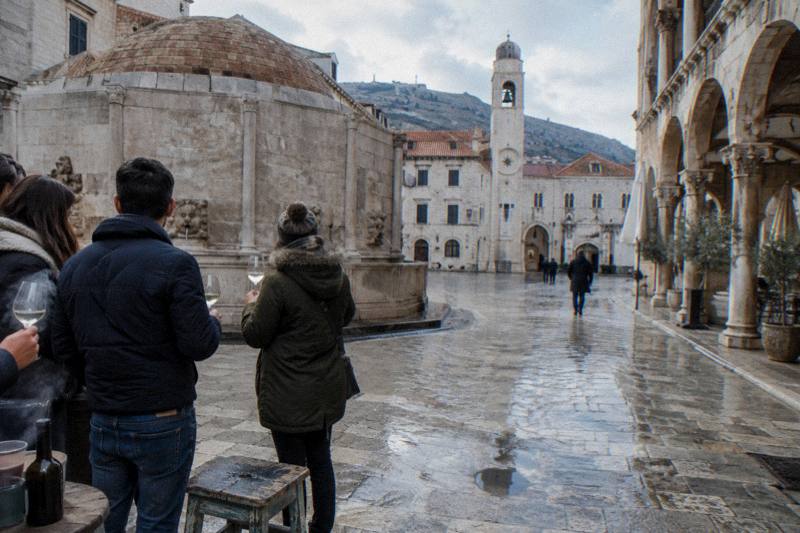
The Old Town market on Gundulićeva poljana is open mornings, Monday to Saturday, and it shows the raw end of the same repertoire: figs, candied and dried, olive oil, cheese, liqueurs. A tasting walk through the Old Town turns those stalls and the restaurants behind them into a single moving meal. The full meal walking tour by Do Eat Better Experience covers at least four stops with the equivalent of a full meal, from €109 per person, rated 4.8 across 5 reviews, a small number of reviews so far.
Which Dalmatian Dishes Do Dubrovnik Tours Actually Serve?
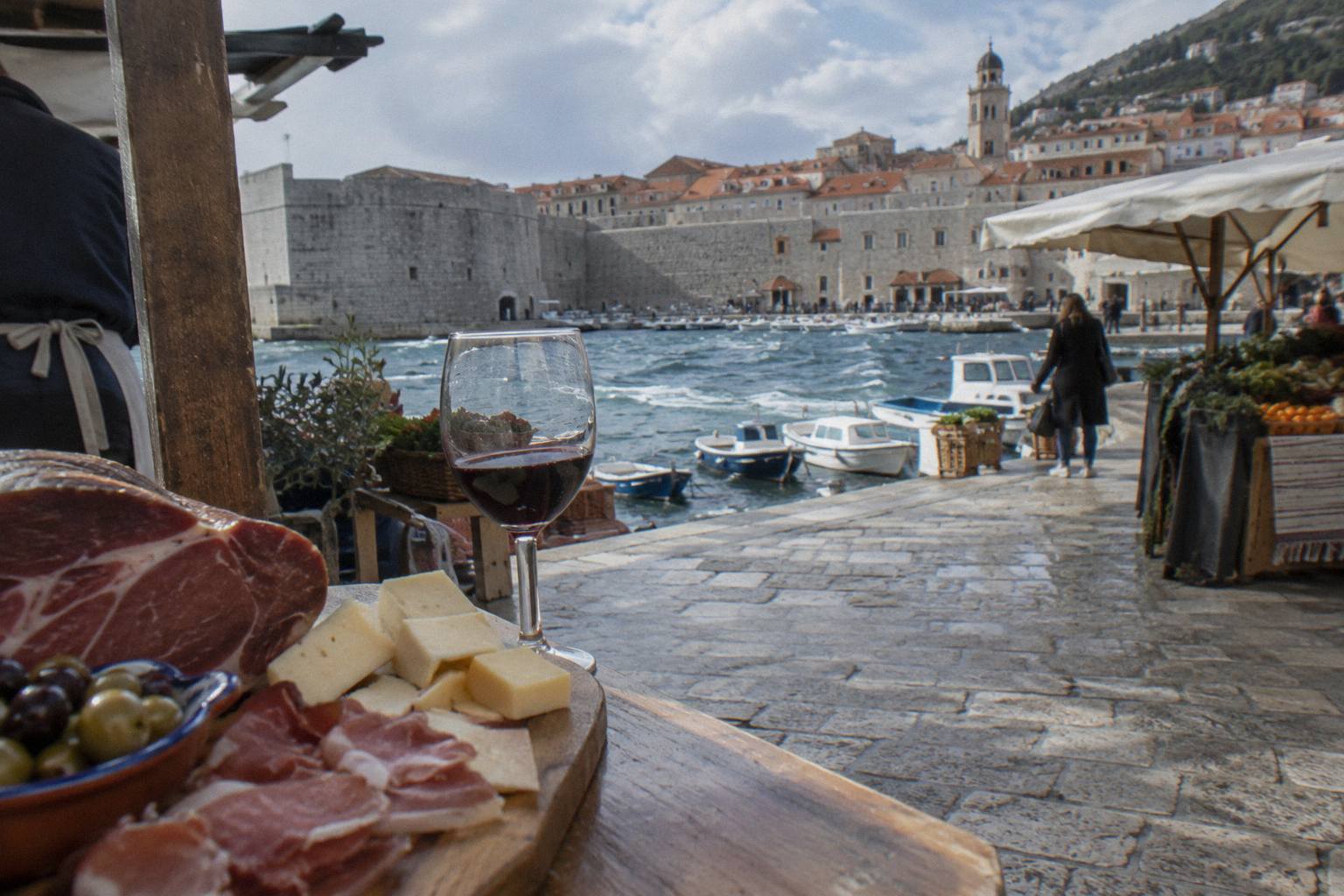
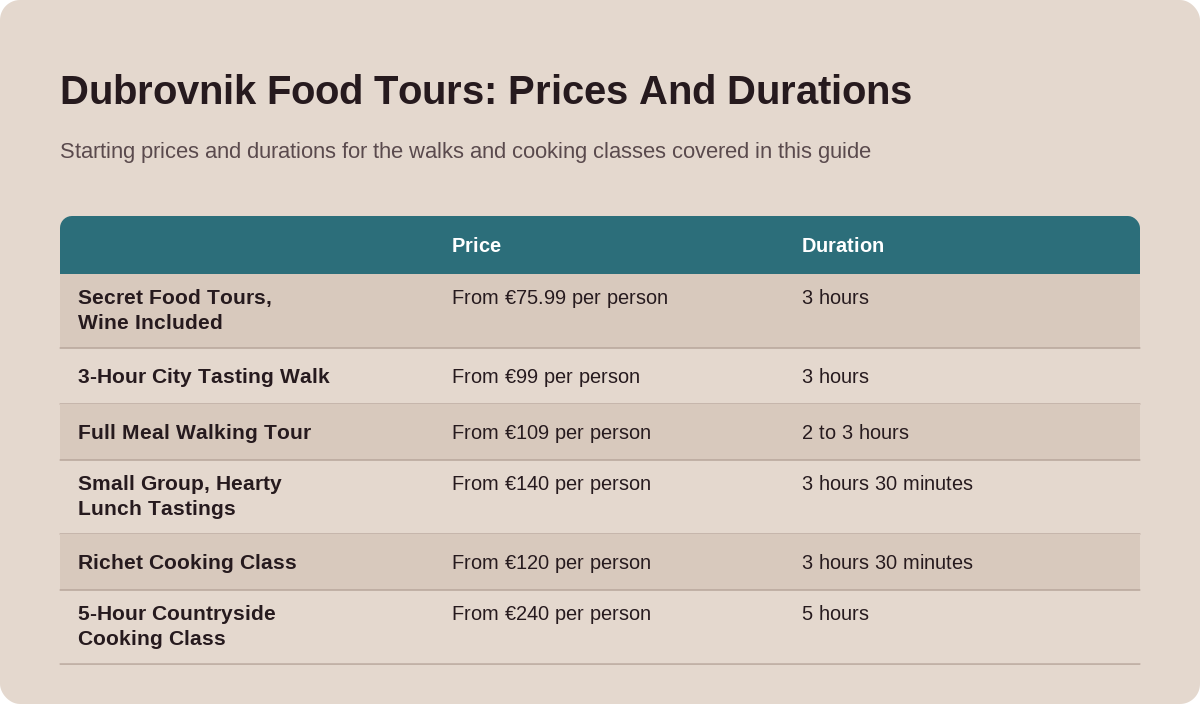
The Old Town tasting walks serve the widest slice of the traditional menu in the shortest time. The 3-Hour City Tasting Walk by Free Spirit Tours Dubrovnik covers five local spots with sweets, olive oil, cured meats and cheese with a glass of wine, and black risotto or rozata, from €99 per person. The Secret Food Tours, Wine Included walk lists eight summer tastings including burek and šporki makaruli, from €76 per person.
This is the fastest route from curiosity to a full plate. The three group walks below differ in size and pace, and the table shows exactly which dishes each one lists. None of them promises a dish it does not name, so read the tasted column as the honest menu.
| Tour | Operator | Price | Duration | Traditional dishes the tour lists |
|---|---|---|---|---|
| Secret Food Tours, Wine Included | Secret Food Tours | From €76 per person | 3 hours | Burek, candied figs, black risotto, šporki makaruli, cheeses and prosciutto, fried oyster, ice cream |
| 3-Hour City Tasting Walk | Free Spirit Tours Dubrovnik | From €99 per person | 3 hours | Arancini, broštulane mendule, olive oil, cured meats and cheese with wine, black risotto or rozata |
| Full Meal Walking Tour | Do Eat Better Experience | From €109 per person | 2 to 3 hours | Itinerant full meal across at least 4 stops, at least one alcoholic drink for guests over 18 |
| Small Group, Hearty Lunch Tastings | Dubrovnik Food Tours | From €140 per person | 3 hours 30 minutes | Dalmatian starter platter, main course at a family-run restaurant, wine tasting, gelato and pastries |
The Small Group, Hearty Lunch Tastings walk by Dubrovnik Food Tours caps at 10 guests, replaces a hearty lunch or dinner, and is the most reviewed walk on this site at 4.8 across 482 reviews. The Secret Food Tours walk carries 4.9 across 289 reviews and runs a separate winter route that starts at Onofrio's Great Fountain and follows the Stradun; the summer and winter variants are chosen at booking. The 3-Hour City Tasting Walk runs small, max 12, with a licensed local guide, rated 4.9 across 43 reviews. All three offer free cancellation with 24 hours' notice.
If you would rather cook than walk, the countryside classes are the other half of the answer. The 5-Hour Countryside Cooking Class by FABULA RAGUSEA has you cook a 4-course Dalmatian meal in a family garden and kitchen, with hotel pick-up and drop-off, vegetarian and gluten-free options on request, from €240 per person and rated 4.9 across 178 reviews. The Richet Cooking Class teaches homemade makaruli pasta, šporki makaruli and rozata in a Dubrovnik studio, from €120 per person, rated 5 across 9 reviews, a small pool. The Dubrovnik cooking classes compared guide lines up all of them side by side.
Black Risotto, Šporki Makaruli And Rozata: What Are They?
Black risotto is cuttlefish or squid risotto coloured with ink; šporki makaruli is a local pasta dish with cheese-rich sauce that the Richet Cooking Class teaches by hand; rozata is a caramel-topped custard dessert served as the sweet finish on the 3-Hour City Tasting Walk. Each appears on at least one tour menu on this site.
Black risotto arrives looking almost black, because the ink of the cuttlefish goes into the pot with the rice. It is the dish visitors photograph most, and three separate walks here list it: the Secret Food Tours walk, the 3-Hour City Tasting Walk, and the Small Group, Hearty Lunch Tastings menu via its Dalmatian courses. The flavor is briny and rich, closer to the sea than to a tomato-based risotto, and it is usually served as a main rather than a starter.
Šporki makaruli is the pasta dish the region keeps for itself. The Richet Cooking Class builds its whole session around making the makaruli by hand and finishing the sauce, then eating the results with a welcome platter of cured meats and cheeses and two glasses of paired local wine, from €120 per person, 3 hours 30 minutes, minimum age 6. The Secret Food Tours summer route also lists šporki makaruli among its eight tastings. The dish name shows up almost nowhere outside southern Dalmatia, which is exactly why cooks and food writers treat it as the local signature rather than a tourist-menu staple.
Rozata is the custard dessert with a dark caramel top, cousin to the crème caramel family but with its own local texture. It appears as the sweet option on the 3-Hour City Tasting Walk, where the fifth tasting is black risotto or rozata depending on the stop, and it is one of the three dishes the Richet class cooks and eats. As with the others, this guide describes the plate, not a contested history: for planning purposes it is enough to know it is the traditional sweet most walks end on.
For a fuller picture of the seafood plates, the Dalmatian food and black risotto guide on this site walks through the same dishes from the restaurant side. And if one dish per evening sounds slow, the evening dinner cruise by Dubrovnik Elafiti Cruise serves an authentic dinner on board while circling the Old Town walls and Lokrum, from €78 per person, rated 4.5 across 67 reviews, minimum age 5.
What Is Peka And Where Can You Eat It?
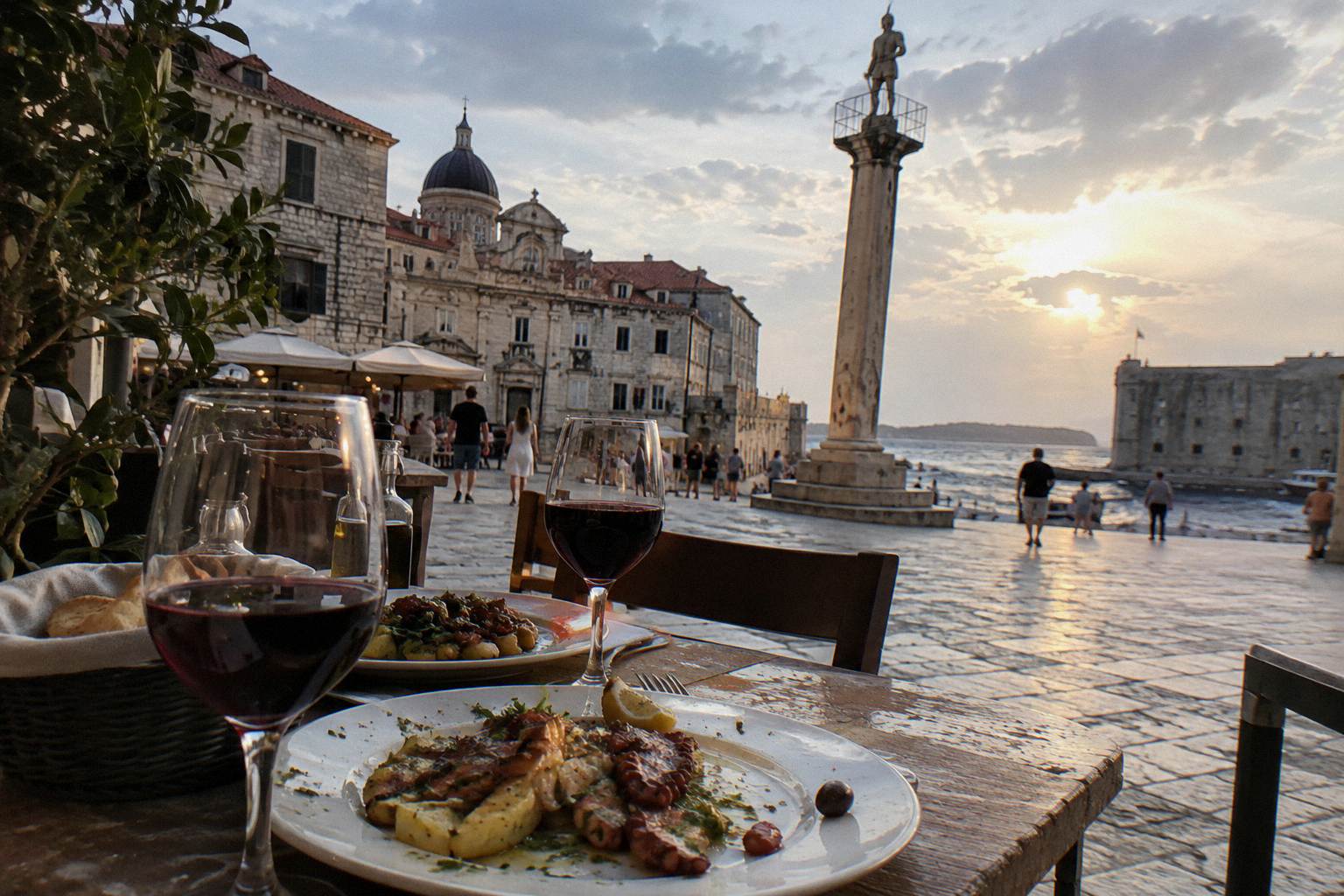
Peka is Dalmatia's slow-cooked dish: meat or octopus with potatoes, cooked under a domed metal lid covered with embers. In Dubrovnik you can learn to cook it on the Peka Cooking Lesson, 4 Hours by Florio za turizam i turisticka agencija d.o.o. in Mokošica village, from €135 per person, or eat a peka-prepared lunch on the private Konavle Gastro And Culture tour by Dubrovnik Tour Guide, from €340 per person.
The technique is the point. A peka bell traps the steam, so the meat braises in its own juices while the embers above and below drive the heat, and everything emerges tender after a long wait. That wait is why peka is an event rather than a quick lunch, and why the tours that feature it run half a day or more. The private Konavle gastro tour states plainly that lunch will be prepared in the traditional Dalmatian peka style, alongside an old mills presentation, traditional sweets and liqueurs, and a wine tasting at a family-run winery, minimum age 12, rated 5 across 15 reviews.
The Peka Cooking Lesson is the hands-on version. It runs 4 hours in Mokošica village, includes a peka meal and a glass of homemade wine, and offers a vegetarian option; lunch is served from April to October per its booking page, and transfer to the venue is not included. It is rated 5 across 10 reviews, a small number of reviews, and carries a minimum age of 18. Its listed exclusions are gratuities and private transportation, so plan the ride to Mokošica yourself.
Burek belongs on the same list even though it is a bakery item rather than a table dish: flaky pastry, and the first tasting on the Secret Food Tours summer route. Alongside it that walk serves candied figs, cheeses and prosciutto, a fried oyster and ice cream, which between them cover the sweet, the salty and the sea ends of the traditional menu in three hours.
Why Are Ston Oysters The Shellfish To Try?
Mali Ston Bay farms the European flat oyster and the Mediterranean mussel in a protected marine area with centuries of shellfish farming behind it. Oysters reach market size in about 2 to 3 years, and farm visits run year-round, with the cooler months described as the best time. Several tours on this site put you on a boat at the farm, from €138 per person.
The Mali Ston oyster farm page and the official Ston pages on farm visits describe the bay as a protected marine area, and the farming technology page gives the 2 to 3 year cycle: about a year on collectors, then about two years growing on ropes. The Ston oyster festival falls around the Feast of St Joseph on 19 March, which tells you when the locals themselves celebrate the oyster, and the cooler months are described as the best season, though farms receive visitors all year.
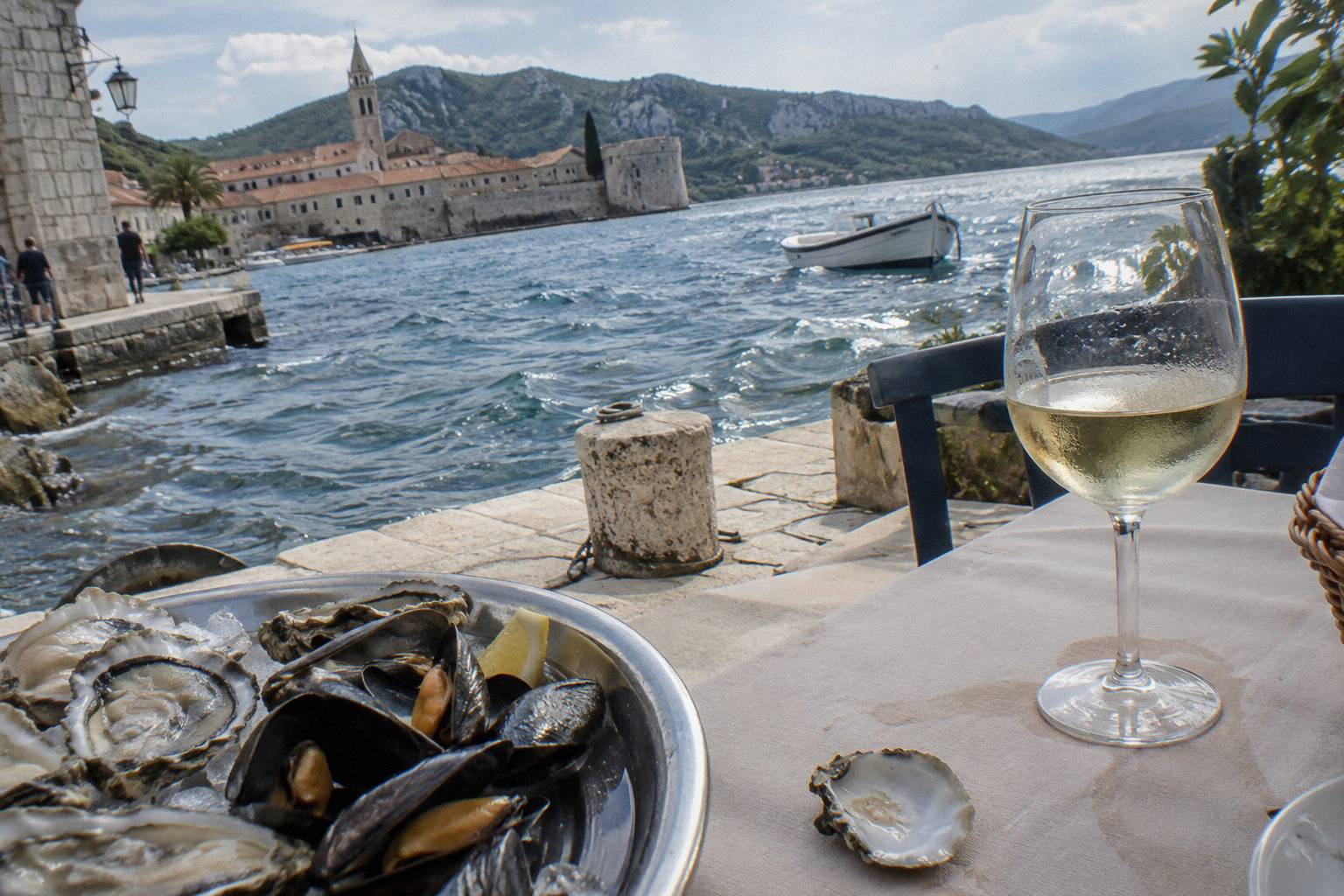
The tours divide by style. The Oyster And Mussels Lunch Boat Tour by Travel agency City Of Stone runs 5 to 6 hours through Hodilje village and Mali Ston Bay with oysters, mussels and Buzara in tomato sauce, wine included, from €138 per person, rated 4.8 across 35 reviews. The Oyster Farm And Winery, Tapas Included tour by Dubrovnik Wine Tours pairs 5 oysters with one matching wine at the farm, then 5 wines with tapas, minimum age 16, from €158 per person, rated 4.9 across 25 reviews. At the other end, Private Oysters And Wine, All Inclusive by Dubrovnik Tour Guide covers entrance to the saltworks, a boat ride to the oyster farm and a family winery, from €340 per person, rated 5 across 86 reviews; it is the one tour on this site whose own title says all inclusive.
Per person, scale €0 to €340
Two cautions the fine print forces. The Ston Oysters tour by Dubrovnik Tours - Horizon, from €185 per person, pays the farm lunch in cash on the day, with the boat and winery fees outside the price. And Private Wine And Oysters, Per Vehicle by Simply H is priced per vehicle from €750, with tastings paid separately at €40 per person per winery and €60 per person for the oyster experience, so it never compares directly with a per-person ticket. The dedicated Ston oyster tour guide sorts out all the variants.
Which Croatian Wines Come With The Food?
Plavac Mali is the native Dalmatian red grape behind Dingač and Postup, which are among Croatia's first protected wine origins, both made from 100 percent Plavac Mali. On the white side, Malvasija Dubrovačka is a Konavle variety revived from near extinction, with a clone officially recognised in 2024. Dubrovnik's wine tours pour both, often beside the dishes above.
The Dingač and Postup guide covers the two Pelješac origins and their shared parent grape, a red variety related to Zinfandel that thrives on the steep southern slopes of the peninsula. The Pelješac day trips from Dubrovnik exist largely to pour them: the Wine Tasting, Ston Village Day Trip by Super Tours visits three family-run Pelješac wineries with hotel pickup and drop-off, from €115 per person, rated 4.6 across 29 reviews, though food and drinks are excluded. The Peljesac Wine Only tour by Feel Dubrovnik pours up to 4 wines in each winery, minimum age 18, from €235 per person, rated 5 across 8 reviews, a small number of reviews, with lunch not included.
Malvasija Dubrovačka is the local white story. It is a Konavle variety that came back from near extinction, and a clone of it was officially recognised in 2024. The Konavle Valley is where you drink it: the Konavle Village Lunch And Wine tour by Magical Croatia tastes award-winning local wines at Botaro Winery before a traditional lunch, from €200 per person, rated 4.8 across 35 reviews, minimum age 7. The Konavle Valley wine and food day trip guide covers the full Konavle menu.
One practical note that shapes the choice. Croatia's drink-drive limit is 0.5 per mille, and 0.0 for drivers under 24 and for novice and professional drivers, which is the whole argument for booking a tasting day with transport included rather than driving the Pelješac peninsula yourself. Most of the wine days here include an air-conditioned vehicle, and the private Private Wine Tour, Tastings Only by DORIA Ltd adds apartment, hotel or port pickup, from €299 per person, rated 5 across 74 reviews, minimum age 18, with lunch excluded and Ston walls entrance tickets optional.
Which Tour Serves The Dish You Want?
Match the dish to the tour format. For black risotto and rozata in one evening, book an Old Town tasting walk from €76 per person. To cook šporki makaruli or peka yourself, book a cooking class from €120 per person. For oysters and Plavac Mali, book a Pelješac or Ston day trip from €115 per person. Every dish on this page is served by at least one tour on this site.
The table below is the short version of the whole article. Read down the left column for the dish, across for the tour that lists it, and treat the price column as the per-person starting figure exactly as each booking page shows it.
| Dish or drink | Tour that lists it | Operator | From (per person) |
|---|---|---|---|
| Black risotto | Secret Food Tours, Wine Included | Secret Food Tours | €76 |
| Rozata | 3-Hour City Tasting Walk | Free Spirit Tours Dubrovnik | €99 |
| Šporki makaruli | Richet Cooking Class | Richet | €120 |
| Peka | Peka Cooking Lesson, 4 Hours | Florio za turizam i turisticka agencija d.o.o. | €135 |
| Burek | Secret Food Tours, Wine Included | Secret Food Tours | €76 |
| Oysters and mussels | Oyster And Mussels Lunch Boat Tour | Travel agency City Of Stone | €138 |
| Dingač and Postup reds | Wine Tasting, Ston Village Day Trip | Super Tours | €115 |
| Konavle whites and lunch | Konavle Village Lunch And Wine | Magical Croatia | €200 |
Private formats cover the same dishes for groups that want their own guide. Private Tapas And Wine by Dubrovnik Tour Guide serves at least 13 tapas-style local tastings paired with Croatian wine across 3 local taverns, meeting under the Clock Tower, from €340 per person, rated 5 across 21 reviews, minimum age 12. Private Sightseeing, Meal Included by ROSOTRAVEL Croatia starts at Pile Gate and includes 1 meal, 1 cake, 1 soft drink and 1 coffee or tea with a private licensed guide, from €249 per person. The private-versus-group trade-off is covered in the private or small group food tour article.
What Mistakes Trip People Up?
The common mistakes are fixable before booking: expecting every oyster tour to include tastings when several charge them on the day, comparing per-vehicle prices with per-person tickets, assuming children can join wine tastings when several tours set 18 as the minimum age, and expecting peka on a three-hour walk when it belongs to the half-day formats. Read the inclusions line on the booking page before paying.
The extras problem is the most expensive. The Private Wine Tasting, No Lunch tour by Cava tours Dubrovnik, from €225 per person, pays its winery tastings separately; lunch is not included either. The Ston oysters trip mentioned earlier pays the farmer in cash on the day. Neither is a flaw, but a visitor comparing headline prices without reading the exclusions will misjudge the real cost by a wide margin. The food tour cost breakdown article works through the arithmetic.
The second mistake is the price basis. Simply H's Private Wine And Oysters runs from €750 per vehicle and Dubrovnik-Trips' Private Luxury Gastro from €505 per vehicle, while the Private 7-Hour Cooking, Wine Tasting by Dubrovnik Tours - Horizon is from €845 per group of up to 4. Those figures sit beside per-person prices on comparison sites all the time, and they mean nothing until you divide by your own headcount, which is exactly the sum the booking pages refuse to do for you.
The third is age. Croatia sells and serves alcohol from 18, and the wine-heavy rows state it plainly: minimum age 18 on the Feel Dubrovnik, DORIA and BreatheInCroatia tours, under 18s not suitable on the Maritimus Travel oyster day. Family-friendly rows exist, with minimum ages of 5, 6, 7 and 12 scattered across the dinner cruise, the Richet class, the Konavle lunch and the private tapas tours, and the kids on food tours article goes through them.
The last mistake is seasonal. The Secret Food Tours walk splits into summer and winter routes chosen at booking, the peka lesson serves lunch only from April to October, and the oyster crowd leans toward the cooler months. None of that blocks a visit at any time of year; it just means the dish you get depends slightly on when you come, which the best time of year for a food or wine tour article maps out.
| Mistake | The fix |
|---|---|
| Ignoring paid-on-the-day extras | Check the exclusions line; some tastings and farm lunches are paid separately |
| Comparing per-vehicle with per-person | €750 per vehicle and €750 per person are different products |
| Booking wine tastings for under 18s | Several rows set minimum age 18; pick a family row instead |
| Expecting peka on a short walk | Peka belongs to 4-hour-plus classes and private Konavle tours |
| Assuming one summer menu | Some walks run separate winter routes chosen at booking |
Common Questions About Traditional Croatian Food
What Food Is Dubrovnik Known For?
The dishes the local tours list by name: black risotto, šporki makaruli, rozata, peka, burek, arancini and other sweets, olive oil, cured prosciutto and cheese, and the oysters and mussels farmed in Mali Ston Bay. Several Old Town tasting walks serve five or more of these in a single three-hour route.
Is Croatian Food Similar To Italian Food?
Partly. The pasta tradition, the olive oil and the seafood grilling overlap with the Italian coast, but the Dalmatian plates stand apart: peka cooked under embers, šporki makaruli, rozata, and the Plavac Mali and Malvasija Dubrovačka wines. The similarities and differences are covered in a dedicated article on this site.
What Is A Typical Dalmatian Dinner?
A starter of cured prosciutto and cheese with olives, a pasta or risotto course such as black risotto or šporki makaruli, a main of seafood or peka-cooked meat, and rozata to finish, with local red or white wine. The Small Group, Hearty Lunch Tastings walk builds exactly that arc, from €140 per person.
Are Ston Oysters Safe To Eat Year-Round?
Farm visits in Mali Ston Bay run year-round, and the cooler months are described as the best time for the oyster itself. This site does not give health advice; any medical question about shellfish belongs with a doctor, not a travel guide.
Can You Learn To Cook Croatian Food In Dubrovnik?
Yes. The 5-Hour Countryside Cooking Class by FABULA RAGUSEA teaches a 4-course Dalmatian meal from €240 per person, the Richet Cooking Class teaches makaruli pasta and rozata from €120 per person, and the Peka Cooking Lesson covers peka from €135 per person.
Do The Food Tours Include Wine?
Most of the walks on this site list wine in their inclusions: the Secret Food Tours walk pours rosé and red with its summer tastings, the 3-Hour City Tasting Walk pairs a glass with the cured meats and cheese, and the wine-focused day trips build the itinerary around the tasting. Alcohol is served only to guests aged 18 and over.
Before you book, one last pass at the three formats worth your money: a full meal walk, a countryside cooking class, and the most-reviewed small group walk on the site.
Keep exploring: the Croatian wine and Plavac Mali guide covers the reds and whites named above, and the what to eat in Dubrovnik guide turns this dish list into a day-by-day eating plan for your stay.